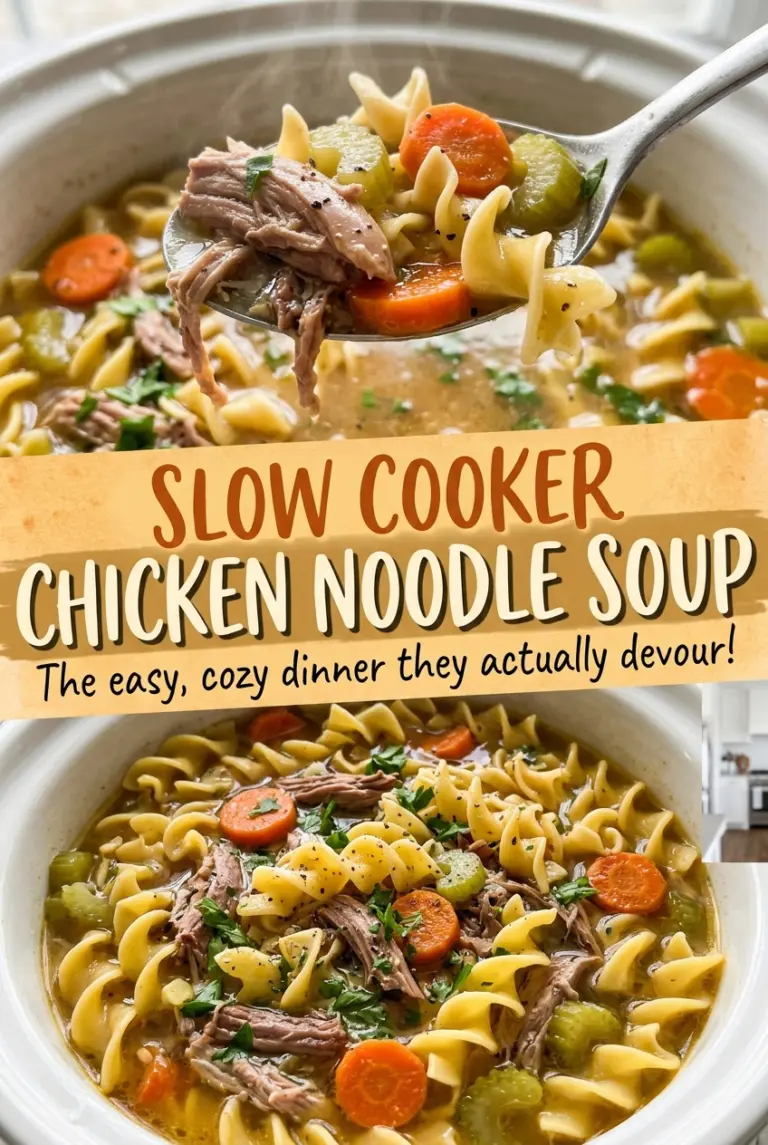

Paula Deen chicken noodle soup lands in the bowl with a rich golden broth, tender shreds of chicken, and wide egg noodles that hold onto every bit of flavor. It eats like the kind of soup you remember from a big family table: hearty, silky, and full enough to count as dinner without needing much beside it.
What gives this version its depth is the two-stage broth. The first simmer pulls flavor and body from the whole chicken, while the second round adds fresh vegetables, butter, and seasoning so the finished soup tastes layered instead of flat. The chicken stays tender because it’s cooked gently and added back at the end, and the noodles go in only after the broth is already where it needs to be.
Below, I’ve included the small details that matter most: how to keep the broth clear enough to look clean in the bowl, when to add the noodles so they don’t turn mushy, and how to stretch this into a make-ahead meal without losing that homey texture.
The broth came out rich and golden, and the noodles stayed tender instead of falling apart. I loved that the chicken got shredded and added back at the end — it tasted fresh and not stringy at all.
Save this Paula Deen chicken noodle soup for the nights when you want a rich broth, tender chicken, and noodles that stay perfectly spoonable.
The Reason the Broth Tastes Rich Instead of Watery
The biggest mistake in chicken noodle soup is treating the broth like an afterthought. If you start with plain water and a pile of vegetables, the soup can taste thin even after a long simmer. Here, the whole chicken gives the broth body, and the small amount of broth added at the beginning jump-starts the savory base before the vegetables have a chance to collapse.
The second detail that matters is the butter. It doesn’t make the soup heavy in the wrong way; it rounds out the broth so it tastes finished. Add the noodles too early and they soak up too much liquid, turning soft and cloudy. Add them after the chicken is shredded and the vegetables have already done their work, and they stay pleasantly tender.
What Each Ingredient Is Doing in This Soup

- Whole chicken — This is the backbone of the soup. A whole bird gives you both meat and a broth with real depth that boneless chicken breast can’t match on its own. If you need a shortcut, use bone-in chicken thighs, but expect a slightly different texture and a less full-bodied broth.
- Carrots, celery, and onion — These build the classic soup base, and the split addition is intentional. Half go in at the beginning to flavor the broth, then the fresh batch goes in later so you still get defined vegetable texture in the finished bowl.
- Butter — This is what gives the broth that Paula Deen-style richness. Use unsalted butter so you can control the seasoning at the end. If you skip it, the soup will still work, but it won’t taste as round or satisfying.
- Wide egg noodles — These are the right noodle for this soup because they hold their shape and catch the broth well. Thin pasta can disappear into the pot. Add them at the very end so they don’t absorb all the liquid before serving.
- Fresh parsley for garnish — It’s not just decoration. That last handful wakes up the bowl and keeps the soup from tasting too soft or one-note.
The 20 Minutes That Actually Matter
Building the Broth Base
Put the chicken, water, some of the broth, half the vegetables, and the bay leaves into a very large pot. Bring it up to a boil, then lower it to a steady simmer and skim off the foam that rises in the first few minutes. That foam is just protein and impurities, but if you leave it there, the broth turns murky and loses its clean look. Keep the simmer gentle; a hard boil will shred the chicken into stringy pieces before it has a chance to stay juicy.
Shredding and Straining
When the chicken is falling off the bone, pull it out and let it cool just enough to handle. Shred the meat, discard the skin and bones, then strain the broth before returning it to the pot. This step is what separates a homey soup from one with little bits of overcooked vegetable scattered through it. The strain gives you a cleaner broth and a better texture in the final bowl.
Finishing with Fresh Vegetables and Herbs
Add the remaining broth, butter, fresh carrots, celery, onion, and garlic to the strained liquid. Simmer until the vegetables are crisp-tender and the garlic no longer smells sharp. Then stir in the shredded chicken, thyme, and parsley. If you add the herbs too early, they can taste muted and faded by the time the soup is done.
Cooking the Noodles at the End
Drop in the egg noodles and cook just until tender, usually 6 to 8 minutes depending on the brand. The broth should still be gently bubbling, not aggressively boiling. The most common mistake here is walking away and coming back to noodles that have absorbed too much liquid and swollen past the point of grace. Taste the broth again before serving and season with salt and pepper until it tastes full and balanced.
How to Adapt This for Different Tables and Leftovers
Gluten-Free Version
Swap the egg noodles for a gluten-free noodle that holds up in broth, or serve the soup over rice. Add the noodles only after the broth is fully seasoned, since many gluten-free pastas soften faster and can break apart if they sit too long in the pot.
Dairy-Free Version
Leave out the butter and add an extra splash of broth if the soup tastes lean. You’ll lose a little of the rounded richness, but the chicken and herbs still carry the dish well. A tiny drizzle of olive oil at the end can soften the edges without changing the flavor too much.
Using Rotisserie Chicken Instead
This is the quickest shortcut. Skip the whole-chicken simmer and start with good broth, then add shredded rotisserie chicken after the vegetables are tender. You won’t get the same depth from the bones, so taste carefully and season a little more boldly at the end.
Storage and Reheating
- Refrigerator: Store for up to 4 days. The noodles will keep soaking up broth, so expect the soup to thicken.
- Freezer: It freezes best without the noodles. Freeze the broth, chicken, and vegetables together, then cook fresh noodles when you reheat.
- Reheating: Warm it slowly on the stove over medium-low heat until the broth is steaming, not boiling. If it’s already thick from the noodles, add a splash of water or broth before reheating so the pasta doesn’t turn gummy.
Answers to the Questions Worth Asking

Paula Deen Chicken Noodle Soup
Ingredients
Chicken soup base
- 1 whole chicken 3-4 pounds
- 10 cup water
- 4 cup chicken broth
- 5 carrots sliced
- 5 celery stalks with leaves, sliced
- 1 onion large, diced
- 4 garlic cloves, minced
- 4 tbsp unsalted butter
- 1 tsp dried thyme
- 1 tsp dried parsley
- 2 bay leaves
- 0.5 salt and pepper to taste (generous)
Noodles and finishing
- 12 oz wide egg noodles
- 1 fresh parsley for garnish
Equipment
- 1 Dutch oven
Instructions
Cook the chicken
- Place whole chicken in a very large pot with water, 2 cups broth, half the carrots, half the celery, half the onion, bay leaves, and 1 teaspoon salt. Heat on high until boiling, then skim foam.
- Simmer at a steady low boil for 45 minutes until the chicken is fall-off-the-bone tender. Keep the surface gently moving so the chicken cooks through evenly.
Shred and strain
- Remove the chicken, shred all meat, and discard skin, bones, and used vegetables. Strain the broth to remove solids.
Build the soup
- Return broth to the pot, then add remaining broth, butter, fresh carrots, celery, onion, and garlic. Bring the pot to a gentle simmer.
- Simmer for 10 minutes to soften the vegetables. The broth should look rich and slightly golden.
- Add shredded chicken, thyme, and parsley. Simmer gently until heated through.
Cook noodles and season
- Add wide egg noodles and cook for 6-8 minutes until tender. Stir occasionally so the noodles don’t clump.
- Season generously with salt and pepper to taste. Turn off the heat when the noodles are fully tender.
- Garnish with fresh parsley before serving. Serve hot in large bowls.