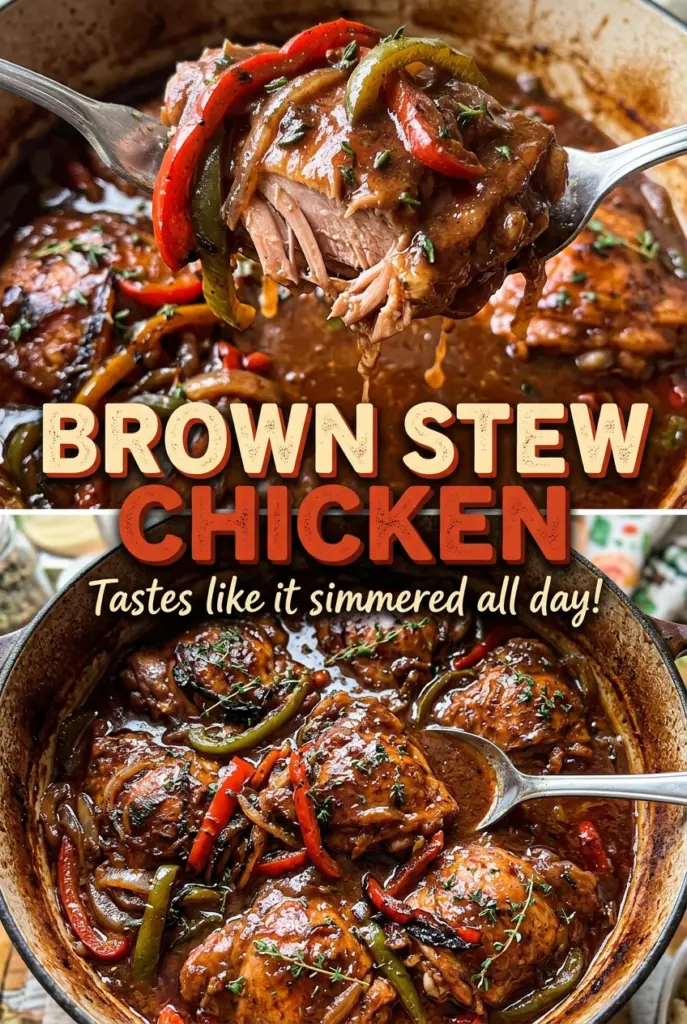
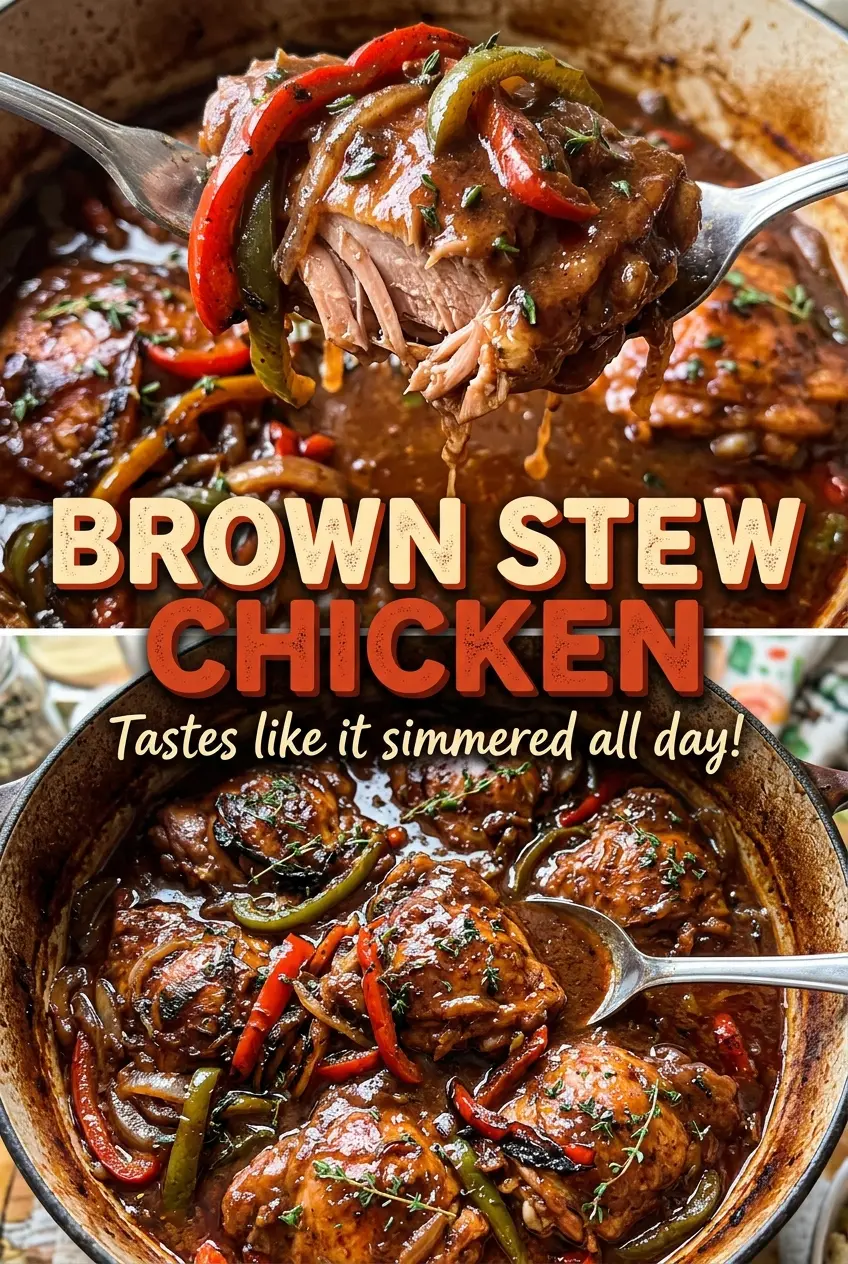
Brown stew chicken earns its place at the table because the gravy turns deep and glossy while the chicken stays tender enough to pull apart with a fork. The flavor starts dark and savory from the browning sauce and caramelized sugar, then builds into something richer when the chicken simmers with thyme, garlic, onions, and peppers. It tastes like a dish that took all day, even though the stovetop work is straightforward.
The part that matters most is the first ten minutes in the pan. The sugar has to reach a true amber color before the chicken goes in, and the chicken needs enough heat to take on color without steaming. That gives the stew its signature mahogany gravy instead of a pale broth with seasoning floating around in it. Marinating the chicken first also does a lot of heavy lifting here, especially if you give it a few hours for the spices to settle in.
Below, I’ve laid out the small details that keep this dish from going flat, plus the substitutions that still give you a proper Jamaican-style stew when you need to work with what’s in the kitchen.
The gravy came out thick and glossy, and the chicken was tender after 40 minutes just like you said. I used drumsticks and thighs, and the caramel color made it taste like it simmered all day.
Save this brown stew chicken for the nights when you want a deep mahogany gravy and fall-apart chicken over rice.
The Step Most Brown Stew Chicken Gets Wrong
Brown stew chicken lives or dies on color, and the color has to come from two places at once: the caramelized sugar in the pan and the sear on the chicken. If the sugar is too pale, the stew tastes flat. If it goes too dark, the whole pot turns bitter before the broth even goes in. That tight window is why this dish deserves your attention at the stove instead of a quick toss-and-simmer approach.
Another common mistake is crowding the pan when the chicken goes in. The pieces need direct contact with the hot oil and caramel, or they’ll steam and shed their coating into the pot. Work in batches if you need to. Deep browning on the outside gives the finished stew a fuller, rounder flavor than broth alone can create.
What Each Ingredient Is Actually Doing in This Dish

- Bone-in chicken thighs and drumsticks — These hold up to a longer simmer and stay juicy while the gravy thickens. Boneless chicken works in a pinch, but it won’t give you the same richness or the same body in the pot.
- Browning sauce and sugar — The browning sauce seasons the chicken and deepens the final color, while the sugar gives the stew that dark caramel note. Don’t rush the caramel stage; pale sugar won’t deliver the same mahogany finish, and burnt sugar will make the whole dish taste harsh.
- Thyme, green onions, garlic, and peppers — This is the backbone of the flavor. Fresh thyme is worth using if you have it, because it perfumes the stew as it simmers, while the peppers and onions soften into the gravy and add sweetness.
- Chicken broth — Use a broth with enough body to carry the sauce. Water will work in an emergency, but the stew tastes thinner and needs more reduction to feel complete.
- Scotch bonnet or habanero — This gives the dish its heat and edge. If you want milder flavor, leave it out entirely or add just a small amount minced so it perfumes the pot without taking over.
The Order That Gives You Dark Gravy Instead of Muddy Broth
Marinating the Chicken
Toss the chicken with the browning sauce, seasoning blend, garlic powder, onion powder, thyme, salt, and pepper until every piece looks coated. Two hours gives you good flavor, but overnight gives the seasoning time to settle into the meat. If the chicken looks wet and loose after marinating, that’s fine; the extra seasoning liquid helps the coating cling when it hits the pan.
Building the Caramel Base
Heat the oil in a large skillet or Dutch oven, then add the sugar and let it melt until it turns a deep golden brown. Don’t walk away once the sugar starts to color, because it can go from amber to burnt in seconds. When it’s ready, it should smell nutty and look like dark liquid caramel, not black syrup.
Browning the Chicken Properly
Add the chicken to the caramel oil and brown it on all sides until the surface turns deeply golden. You’re not cooking it through here; you’re building flavor and color. If the pieces start sticking hard, give them another minute before turning them. They usually release once the crust develops.
Simmering Until the Gravy Tightens
Sauté the onions, peppers, garlic, green onions, and scotch bonnet in the same pot, then return the chicken and pour in the broth. Bring it to a boil, then lower the heat so the liquid settles into a steady simmer. Cover the pot and cook until the chicken is tender and the gravy turns thick enough to coat the spoon. If the sauce looks thin near the end, uncover the pot for the last few minutes and let it reduce.
How to Adapt This for Different Needs Without Losing the Point
Milder Version Without the Scotch Bonnet
Leave out the pepper completely if you want the stew family-friendly, or use just a small amount for a faint heat in the background. You’ll still get the signature savory-sweet gravy from the caramel and browning sauce, which is the part that defines the dish.
Gluten-Free Brown Stew Chicken
Check that your browning sauce and all-purpose seasoning are gluten-free, since brand formulas vary. Once those are covered, the rest of the dish is naturally gluten-free and no texture changes are needed.
Using Boneless Chicken Instead
Boneless thighs will work, but shorten the simmer so they don’t dry out. The gravy will still be good, though it won’t have quite the same depth as bone-in pieces, which release more flavor into the pot.
Storage and Reheating
- Refrigerator: Store leftovers in an airtight container for up to 4 days. The gravy thickens as it chills, which is normal.
- Freezer: It freezes well for up to 2 months. Cool it completely first, then freeze the chicken and gravy together so the meat stays moist.
- Reheating: Reheat gently on the stovetop over low heat with a splash of broth or water. High heat can tighten the chicken and make the gravy seize instead of loosening back up.
Answers to the Questions Worth Asking
Brown Stew Chicken
Ingredients
Chicken and aromatics
- 3 lb bone-in chicken thighs and drumsticks
- 1 green bell pepper, sliced
- 1 red bell pepper, sliced
- 1 onion, sliced
- 4 cloves garlic, minced
- 3 green onions, sliced
- 1 scotch bonnet or habanero pepper, minced (optional)
Marinade
- 2 tsp browning sauce
- 1 tsp all-purpose seasoning
- 1 tsp garlic powder
- 1 tsp onion powder
- 1 tsp dried thyme
- 0.5 tsp salt to taste
- 0.5 tsp pepper to taste
Stew base
- 2 cup chicken broth
- 2 tbsp vegetable oil
- 1 tbsp sugar (for browning)
- 1 fresh thyme for garnish
Equipment
- 1 Dutch oven
Instructions
Marinate
- Mix the browning sauce, all-purpose seasoning, garlic powder, onion powder, dried thyme, salt, and pepper, then coat the bone-in chicken thighs and drumsticks thoroughly.
- Cover and refrigerate for 2 hours, or up to overnight, so the flavors penetrate the chicken.
Brown sugar and sear chicken
- Heat the vegetable oil in a large skillet or Dutch oven over medium-high heat, then add the sugar and let it caramelize until golden brown.
- Add the marinated chicken pieces and brown until deeply golden on all sides, about 6-8 minutes total, then remove to a plate.
Build the stew
- Sauté the onion, bell peppers, garlic, and green onions in the caramel oil until just fragrant, about 4 minutes.
- Add the scotch bonnet or habanero pepper (if using) and sauté for 30 seconds to distribute the heat.
- Return the chicken to the pot, pour in the chicken broth, and bring everything to a boil.
- Reduce heat, cover, and simmer for 35-40 minutes until the chicken is fall-apart tender and the gravy is thick.
Serve
- Ladle the brown stew chicken and thick mahogany gravy over rice, then garnish with fresh thyme.