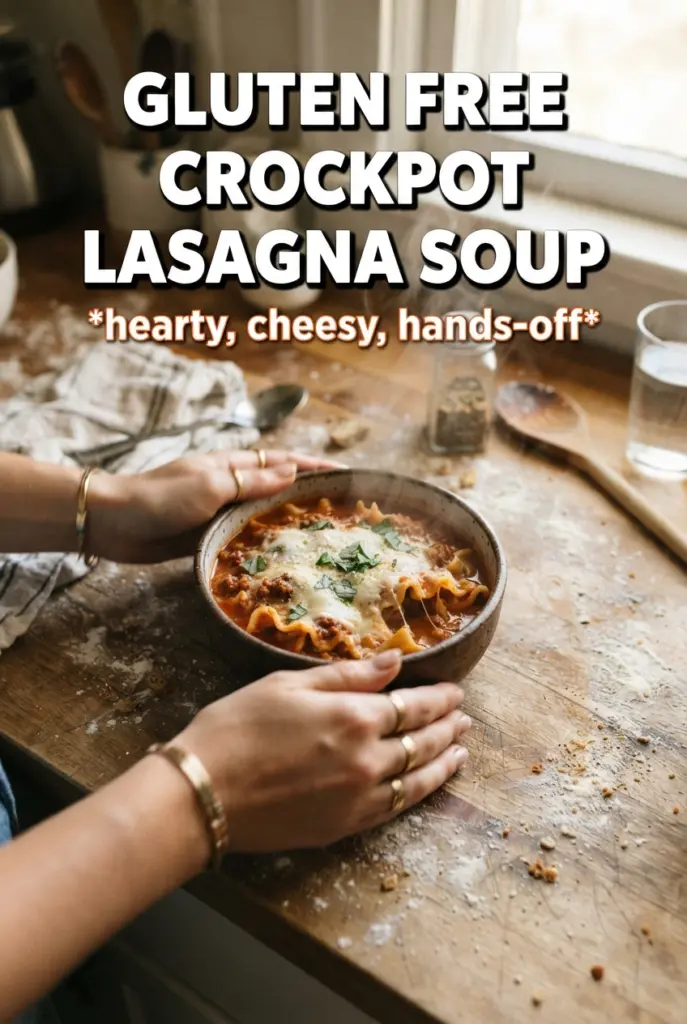
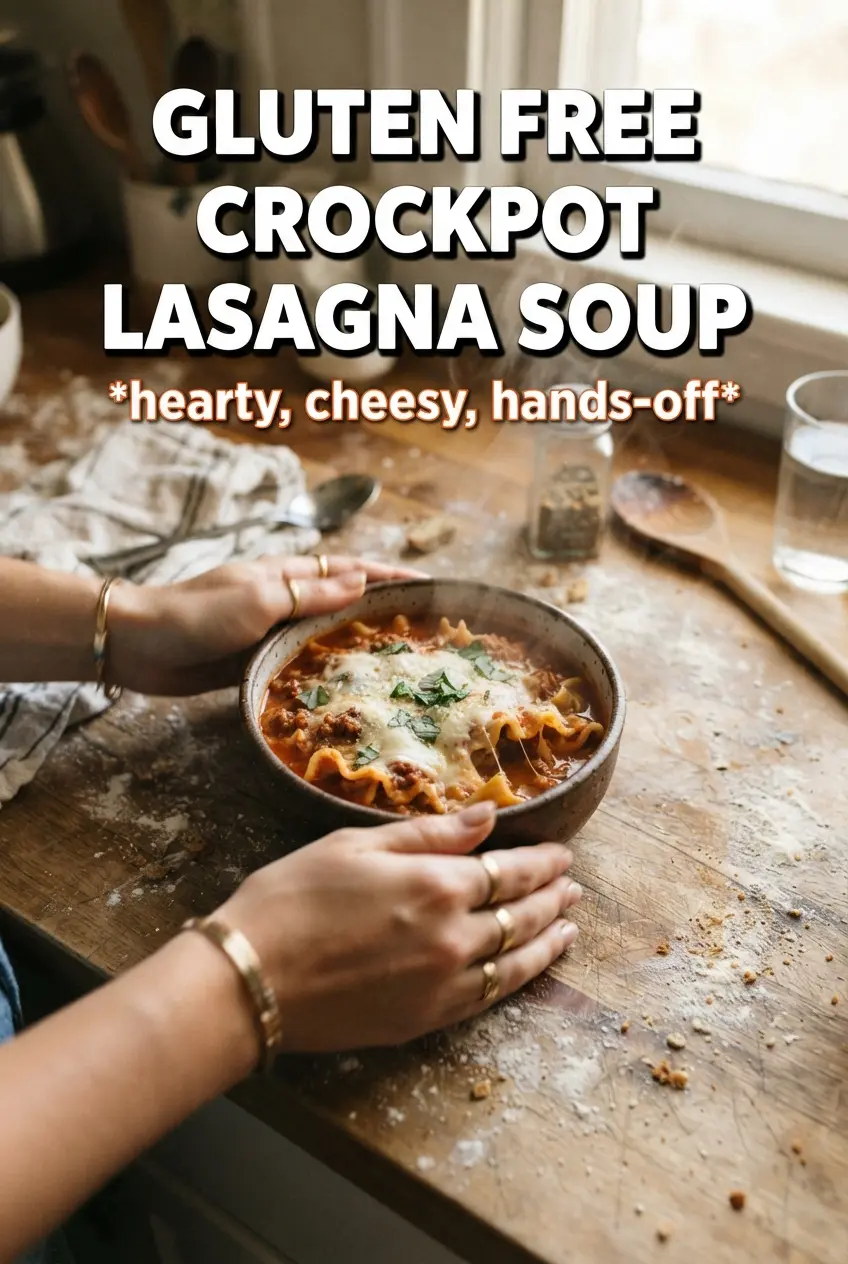
Gluten free crockpot lasagna soup gives you all the comfort of a baked lasagna dinner without the layering, babysitting, or oven time. The broth turns rich and tomatoey, the sausage seasons every spoonful, and the gluten-free pasta soaks up just enough flavor without falling apart if you add it at the end. The best part is the finish: a spoonful of ricotta, mozzarella, and parmesan melting into the bowl until it tastes like lasagna in soup form.
This version works because the slow cooker handles the base while the pasta stays out of the pot until the last stretch. Gluten-free noodles can go from tender to mushy fast, so they need a short cook and a close eye. Browning the sausage first also matters more than people think; it builds a deeper savory base and keeps the broth from tasting flat.
Below, I’ll show you exactly when to add the pasta, how to keep the soup from turning too thick, and a few swaps that still keep the dish hearty and satisfying.
The soup had that real lasagna flavor, and the gluten-free noodles held up better than I expected because I added them near the end. The ricotta topping melted into the broth and made it taste like something from a restaurant.
Save this gluten free crockpot lasagna soup for a cozy dinner with tender GF pasta, savory sausage, and that creamy ricotta topping.
The Trick to Keeping Gluten-Free Pasta Out of the Mush Zone
The main mistake with lasagna soup is treating the pasta like it can sit in the slow cooker for hours. Gluten-free noodles absorb broth faster than regular wheat pasta, and they break down once they’ve gone past tender. That’s why the pasta goes in near the end, after the broth has already developed flavor.
This recipe also stays balanced because the sausage gets browned first. If you skip that step and dump raw sausage into the Crockpot, you lose the deep savory edge that makes the soup taste like lasagna instead of plain tomato soup with noodles. The broth needs that browned fond and rendered fat to carry the whole pot.
- Gluten-free lasagna noodles or penne — Broken lasagna noodles give you the classic look and bite, but GF penne is easier if you want less fuss. Either way, add the pasta late and check it early; the exact timing depends on the brand.
- Italian sausage — This does most of the flavor work. Hot sausage adds heat, sweet sausage keeps it milder, and turkey sausage works if you want a lighter soup, but it should still be browned before it goes in.
- Crushed tomatoes plus diced tomatoes — The crushed tomatoes build the body of the broth, while the diced tomatoes keep some texture. Don’t swap both for one smooth tomato product unless you want a thinner, more uniform soup.
- Ricotta, mozzarella, and parmesan — The cheese topping is what makes the bowl taste like lasagna. Ricotta gives creaminess, mozzarella melts into strings, and parmesan adds salt and depth. If you want a sharper finish, use part pecorino in place of some parmesan.
What Each Ingredient Is Actually Doing in This Recipe
- Primary ingredient (the star) — Quality matters most. Choose the best you can find.
- Cooking medium (oil, butter, or broth) — This carries flavors and prevents dryness.
- Seasonings (salt, pepper, spices, herbs) — Layer flavors so nothing overpowers. Build depth gradually.
- Aromatics (garlic, onion, herbs) — Cook with fat to bloom flavors. Become the foundation.
- Supporting ingredients — Complement the main ingredient without overpowering it.
- Sauce or liquid (if applicable) — Brings flavors together. Balance richness with acid.
- Acid (lemon, vinegar, wine, or other) — Brightens and prevents flat-tasting results.
- Final finish (garnish, glaze, or sauce) — Prevents one-dimensional taste and adds visual appeal.
How to Build the Soup Base Without Losing the Pasta
Browning the Sausage First
Cook the sausage in a skillet until it has a deep brown color and no pink remains, then drain off the excess fat. That browning step gives the soup its backbone, and it also keeps the slow cooker from getting greasy. If the sausage stays pale, the broth tastes flatter no matter how long it simmers.
Letting the Slow Cooker Do the Heavy Lifting
Add the sausage, onion, garlic, tomatoes, broth, tomato paste, Italian seasoning, basil, and red pepper flakes to the Crockpot. Stir well so the tomato paste breaks up instead of sitting in one thick clump at the bottom. Cook on low until the onions are soft and the broth smells rounded and savory, not raw or sharp.
Adding the GF Pasta at the End
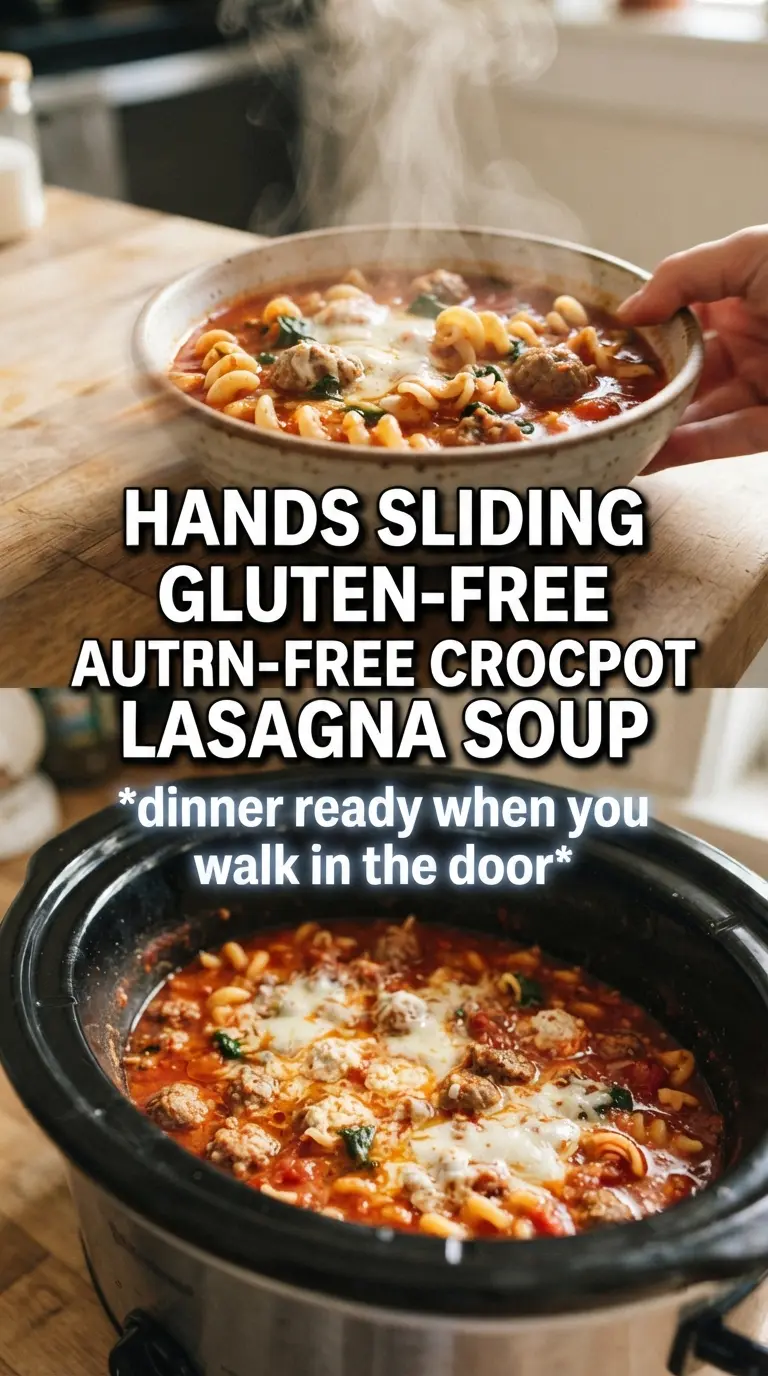
Stir in the broken gluten-free noodles during the last 30 to 35 minutes and keep an eye on them. The broth should be hot enough to cook the pasta, but not boiling hard for long stretches, or the noodles will go past tender and start to collapse. Check a piece early; gluten-free pasta often finishes before the timer does.
Finishing in the Bowl
Season the soup with salt and pepper after the pasta is cooked, since the broth reduces a little as it simmers. Ladle it into bowls and add a generous spoonful of the ricotta mixture on top. The cheese should soften into the broth at the edges while still holding some shape in the center.
Three Ways to Adapt This Soup for the Pantry You Have
Dairy-Free Without Losing the Creamy Finish
Skip the ricotta, mozzarella, and parmesan and top each bowl with a spoonful of dairy-free ricotta or a cashew cream instead. The soup itself is already rich from the sausage and tomato base, so you won’t miss the cheese in the broth. You’ll lose some of the lasagna-style melt, but the bowl will still taste hearty and complete.
Vegetarian Version That Still Tastes Substantial
Use a plant-based Italian sausage and swap the chicken broth for certified gluten-free vegetable broth. You’ll want to choose a sausage with enough seasoning to stand up to the tomatoes, since the meat is doing more than adding protein here. A handful of sautéed mushrooms can help build that savory depth back in.
If You Only Have Regular Pasta Shapes
Use penne, rotini, or broken lasagna sheets if that’s what’s in the pantry, but cook them separately if they’re not gluten-free. Regular pasta can sit in the soup longer without falling apart, which changes the timing a little, but it also can soak up too much broth if left in the slow cooker for hours. Stir it in just before serving if you want the cleanest texture.
Storage and Reheating
- Refrigerator: Store the soup without the cheese topping for up to 4 days. The pasta will keep absorbing broth, so expect it to thicken as it sits.
- Freezer: Freeze the soup base before adding pasta for the best texture. Gluten-free noodles get soft after thawing, so cook a fresh batch and add it when you reheat.
- Reheating: Warm it gently on the stove or in the microwave with a splash of broth to loosen the texture. Don’t blast it on high heat, or the pasta can turn gummy and the dairy topping will separate.
Questions I Get Asked About This Recipe
Gluten Free Crockpot Lasagna Soup
Ingredients
Equipment
Method
- Brown the Italian sausage in a skillet, then drain it and add the sausage to the crockpot. Add the diced onion, minced garlic, crushed tomatoes, diced tomatoes, chicken broth, tomato paste, Italian seasoning, dried basil, and red pepper flakes.
- Cook on Low for 5 to 7 hours (or High for 2.5 to 3 hours). Keep the lid on and avoid stirring aggressively so the broth stays smooth.
- In the last 30 to 35 minutes, add the broken gluten-free lasagna noodles or GF penne. If needed, increase to High to bring the soup back to a steady simmer.
- Cook until the GF pasta is tender, checking frequently because gluten-free pasta can overcook. Turn off the heat and season with salt and pepper to taste.
- Mix the ricotta, shredded mozzarella, parmesan, and fresh basil until combined. Serve each bowl with a generous dollop that melts slightly into the hot soup.