
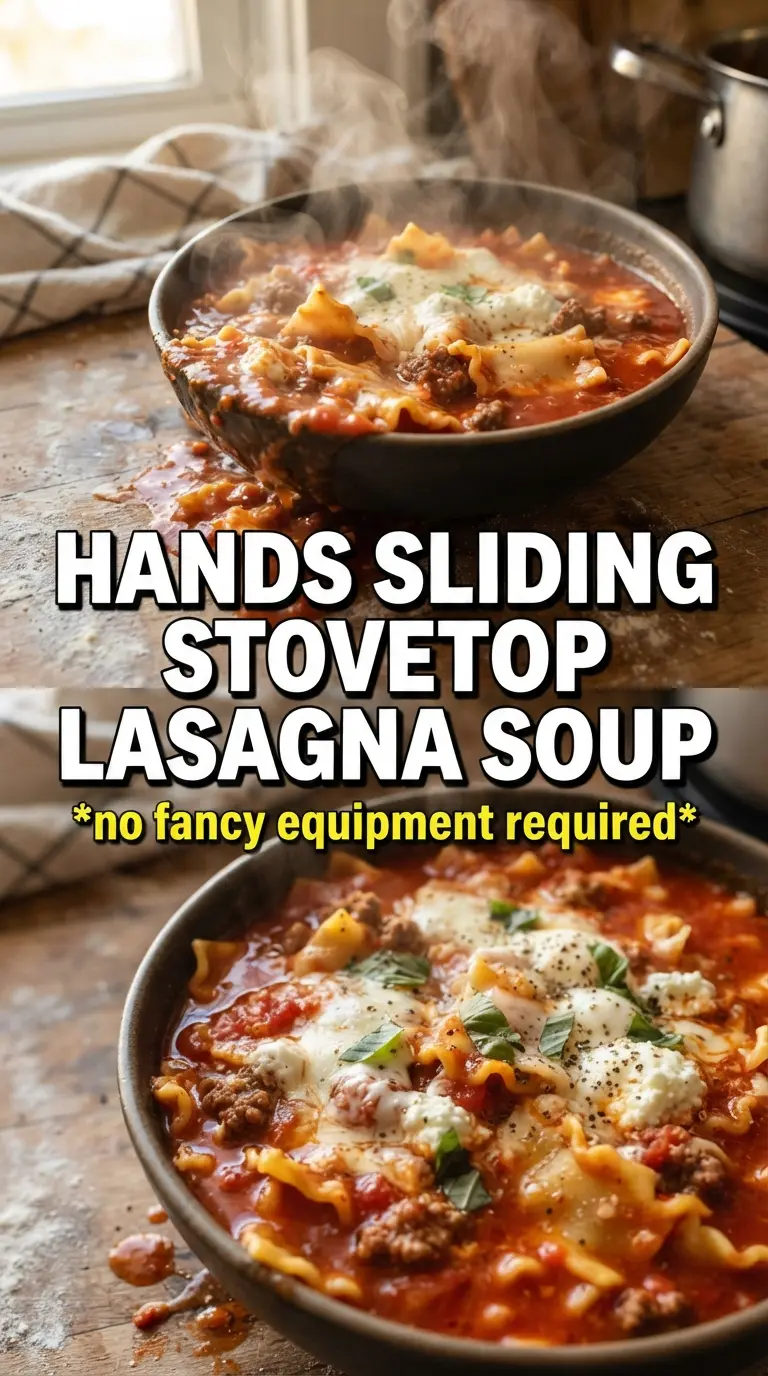
Stovetop lasagna soup gives you the same savory comfort as a baked pan of lasagna, but in a bowl with a rich tomato broth, tender noodles, and that creamy cheese dollop melting into the top. The broth stays bold and deeply seasoned instead of thin or watery, and the broken lasagna noodles catch just enough of the sauce to feel like the real thing without needing a casserole dish or a long bake.
What makes this version work is the order. The sausage browns first for a good, meaty base, then the tomato paste cooks in the pot long enough to lose its raw edge before the broth goes in. That quick step gives the soup a fuller, slower-cooked taste even though it’s on the table in under 30 minutes. The noodle timing matters too: they go in at a full boil, then finish in a steady simmer so they stay tender instead of turning gummy.
Below, I’ve included the small details that keep the broth rich, the noodles in the right texture, and the cheese topping creamy instead of clumpy. If you’ve ever had lasagna soup that tasted flat or turned into a starch-heavy pot of paste, this one fixes that.
The broth had that deep tomato-and-sausage flavor I always want, and the noodles stayed perfectly tender instead of falling apart. I also loved that the ricotta and mozzarella melted into the soup without getting grainy.
Save this stovetop lasagna soup for the nights when you want all the lasagna comfort in one pot, with a creamy ricotta topping and no baking required.
The Secret to Soup That Tastes Like Lasagna, Not Pasta Water
The biggest mistake in lasagna soup is treating the noodles like an afterthought. If they simmer too long, they soak up too much broth and turn the pot thick and heavy. If they go in too early, they lose their shape and the whole bowl starts tasting muddy instead of bright and tomato-rich.
The other trap is undercooking the tomato base. Tomato paste needs a minute or two in the hot pot with the onion and garlic before the broth goes in. That short cook takes away the sharp, raw edge and gives the soup a deeper red color and a rounder flavor.
Broth also matters here. This soup is only as good as the liquid you build it with, so use a broth you’d actually drink on its own. Chicken broth gives a softer, slightly lighter finish, while beef broth adds more depth and makes the sausage taste even heartier.
What Each Ingredient Is Actually Doing in This Pot
- Italian sausage — This is the backbone of the soup. It seasons the broth from the start and gives you enough fat to cook the onion and garlic without needing extra oil. Mild or hot both work, but if your sausage is very lean, leave a spoonful of the rendered fat in the pot so the base doesn’t taste flat.
- Tomato paste — A couple tablespoons make the broth taste cooked and concentrated, not just tomatoey. Let it fry for a minute or two before adding liquid. That step matters more than people think.
- Crushed tomatoes plus fire-roasted diced tomatoes — The crushed tomatoes give the soup body, while the diced tomatoes add little bursts of texture. Fire-roasted tomatoes bring a slight smokiness that keeps the soup from tasting one-note. If you only have regular diced tomatoes, use them, but the flavor will be a little softer.
- Lasagna noodles — Break them into rough 2-inch pieces so they cook evenly and eat like a true lasagna bowl. If you want to use another pasta, bow ties or mafaldine are the closest texture match, but the finished soup won’t have the same layered feel.
- Ricotta, mozzarella, and parmesan — This topping is the lasagna part of the lasagna soup. Ricotta gives creaminess, mozzarella gives melt, and parmesan adds salt and sharpness. Cold cheese straight from the fridge can clump, so let it sit out while the soup cooks.
Building the Base Before the Noodles Go In
Brown the sausage first
Set a large Dutch oven over medium-high heat and cook the sausage until it’s deeply browned and crumbled, not pale and steamed. You want the edges to get a little crisp because that’s where the flavor lives. If there’s a lot of grease in the pot, drain some off, but leave enough behind to coat the onion.
Cook the onion and wake up the tomato paste
Add the diced onion and cook until it turns translucent and soft around the edges, about 3 minutes. Stir in the garlic and tomato paste and cook for 1 to 2 minutes more, until the paste darkens slightly and smells sweet rather than sharp. If the garlic starts to brown hard, the heat is too high and the broth will taste bitter.
Build the broth and season it early
Pour in the crushed tomatoes, diced tomatoes, and broth, then add the Italian seasoning, basil, oregano, and red pepper flakes. Stir well and scrape the bottom of the pot so every browned bit dissolves into the soup. Bring it to a full boil before the noodles go in, because that strong start keeps the pasta from sticking together in a clump.
Cook the noodles just until tender
Add the broken lasagna noodles, then reduce the pot to a steady simmer and stir often. You’re looking for noodles that are soft with a little firmness at the center, not fully bloomed and mushy. Pull the pot off the heat as soon as they’re tender, because they’ll keep softening in the hot broth while you serve.
How to Adjust This for What You Have on Hand
Make It Lighter With Turkey Sausage
Turkey Italian sausage works well if you want a lighter bowl. The flavor is a little leaner, so add an extra pinch of Italian seasoning or a bit more parmesan at the end to bring the broth back into balance.
Use Gluten-Free Pasta Without Losing the Texture
Gluten-free lasagna noodles or a sturdy gluten-free short pasta work fine, but they soften faster than wheat pasta. Start checking them a minute or two early and stop cooking while they still have a little bite. Once gluten-free pasta goes over, it can turn grainy fast.
Go Dairy-Free for the Topping
Skip the ricotta-mozzarella blend and use a dairy-free ricotta or a spoonful of plain unsweetened cashew cream instead. You’ll lose some of the classic lasagna richness, but the soup will still taste complete if you finish it with fresh basil and a little extra olive oil.
Stretch It for a Bigger Crowd
You can add an extra cup of broth and another handful of noodles if you need to feed more people, but don’t add too much pasta unless the pot is large enough to keep everything moving. Too many noodles will absorb the broth and leave you with a thick skillet-style stew instead of soup.
Storage and Reheating
- Refrigerator: Store for up to 4 days. The noodles will keep soaking up broth, so expect a thicker soup the next day.
- Freezer: The soup base freezes well, but the noodles don’t. Freeze the tomato-sausage broth without pasta, then cook fresh noodles when you reheat it.
- Reheating: Warm gently on the stove over medium-low heat with a splash of broth or water. Don’t boil it hard, or the noodles will go soft and the cheese topping can turn gritty.
Answers to the Questions Worth Asking

Stovetop Lasagna Soup
Ingredients
Equipment
Method
- Heat a large Dutch oven over medium-high heat, then brown and crumble the Italian sausage until no longer pink, and drain excess fat.
- Add the diced onion and cook for 3 minutes, stirring often, until softened.
- Stir in the minced garlic and tomato paste, cooking for 1–2 minutes until fragrant and slightly darker.
- Pour in the crushed tomatoes, fire-roasted diced tomatoes, and chicken or beef broth, then stir in the Italian seasoning, dried basil, dried oregano, and red pepper flakes.
- Bring the soup to a full boil over high heat, with active bubbling across the surface, then add the broken lasagna noodles.
- Reduce to a steady simmer and cook for 10–12 minutes, stirring often, until the noodles are just tender and have absorbed some broth.
- Season with salt and pepper to taste, then serve immediately.
- Mix the ricotta, mozzarella, and parmesan until combined into a thick dollop, then spoon onto each bowl.
- Finish each serving with fresh basil so it looks bright and aromatic on top.