
Rotisserie chicken noodle soup lands on the table fast, but it still tastes like it simmered all afternoon. The broth turns golden and savory, the vegetables soften just enough to give the spoon some body, and the shredded chicken stays tender instead of dry. Egg noodles soak up flavor without falling apart, which is what keeps this bowl comforting instead of muddy.
The shortcut here is the rotisserie chicken, but the soup only works because the vegetables get a head start in the pot before the broth goes in. That quick sauté builds a deeper base than dumping everything together at once. Pulling the chicken off the bones while the vegetables cook also keeps the whole recipe moving, so the noodles go in only when the broth is already seasoned and hot.
Below, I’ve included the little timing detail that keeps the noodles from getting bloated, plus a few easy ways to adapt this soup if you want it a little lighter or need to stretch it for a bigger crowd.
The broth had such a good homemade taste for being this quick, and the noodles stayed perfect because I added them at the end like you said. My husband asked if I made it from scratch.
Rotisserie chicken noodle soup saves dinner when you want homemade comfort without a long simmer.
The Shortcut That Still Tastes Like It Simmered All Afternoon
The main thing that separates a good chicken noodle soup from a flat one is how you build the broth. Rotisserie chicken gives you seasoned meat fast, but it doesn’t automatically give the soup depth. That comes from softening the onion, carrots, and celery in the pot first so they release a little sweetness and create a better base before the broth goes in.
The noodles are the other place people trip up. If they go into the pot too early, they keep soaking up liquid and turn heavy and swollen. Add them after the chicken has already warmed through, and stop cooking when they’re tender but still have a little bite in the center. The soup should look brothy, not porridge-thick.
What Each Ingredient Is Actually Doing in This Soup
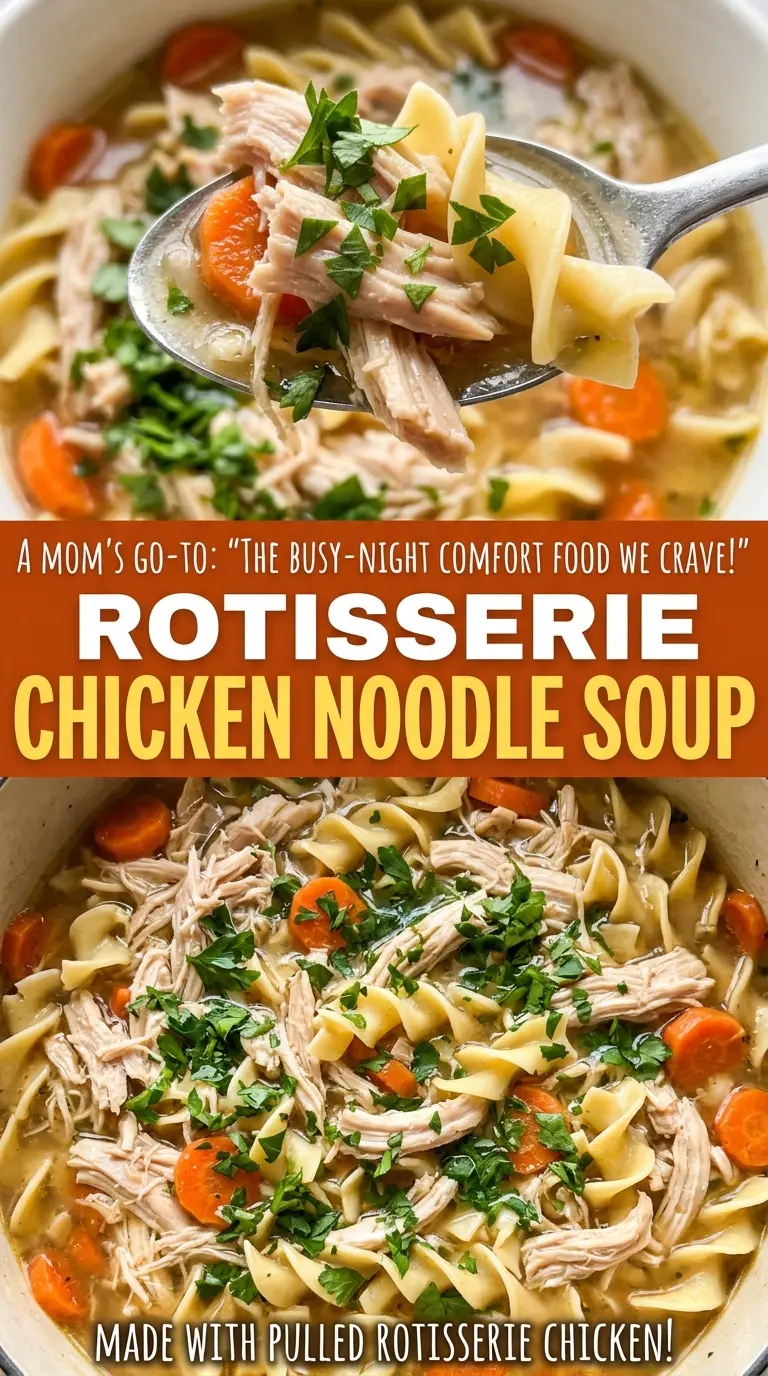
- Rotisserie chicken — This is the backbone of the recipe and the reason it comes together so quickly. Remove the skin before shredding so the broth stays clean and the soup doesn’t get greasy. Dark and white meat both work; a mix gives the best texture.
- Chicken broth — Use a broth you’d actually drink on its own. Since the recipe is short, the broth has to carry the seasoning. If yours is low-sodium, you get more control at the end, which matters because the chicken itself may already be seasoned.
- Carrots, celery, and onion — This trio builds the flavor base. Slice the carrots and celery evenly so they soften at the same rate, and dice the onion small enough that it disappears into the soup instead of floating in sharp chunks.
- Egg noodles — Egg noodles give the soup its classic texture and thicken the broth just enough without needing flour or cream. Wide noodles hold up best, but any egg noodle works if you keep the simmer gentle and don’t overcook them.
- Dried thyme and parsley — These herbs make the soup taste finished without requiring a long herb bouquet. Dried thyme gives the broth a savory backbone, while the parsley keeps it from tasting dull. Fresh parsley at the end adds brightness that dried herbs can’t deliver.
- Garlic — Fresh garlic and a little garlic powder work together here. The fresh cloves build aroma in the pot, and the garlic powder rounds out the broth so it tastes seasoned all the way through instead of just smelling garlicky on top.
Building the Broth Before the Noodles Go In
Softening the vegetables first
Warm the oil or butter in a large pot, then cook the onion, carrots, and celery until the onion turns translucent and the carrots just start to soften. You want the vegetables to glisten and smell sweet, not brown. If the pot is too hot, the garlic can scorch later and leave the whole soup bitter, so keep the heat at medium.
Adding the garlic and broth
Stir in the garlic for about a minute, just until it smells fragrant, then pour in the broth and add the thyme, parsley, and garlic powder. The garlic should smell sharp and savory, not toasted. Bring the pot up to a boil so the soup gets hot enough to cook the noodles evenly, then lower it before the chicken goes in.
Warming the chicken and cooking the noodles
Add the shredded chicken first so it has time to heat through in the broth. Then add the noodles and simmer until they’re tender, usually 6 to 8 minutes. If you let the soup boil hard at this stage, the noodles can break apart and cloud the broth, so keep it at a steady simmer and taste one noodle before you pull the pot off the heat.
Finishing with salt, pepper, and herbs
Season generously at the end. Broth and rotisserie chicken can vary a lot in saltiness, and this soup usually needs more than people expect to taste complete. The fresh parsley goes in last so it stays bright and doesn’t lose its color in the hot broth.
Three Ways to Adjust This Soup Without Losing What Makes It Work
Gluten-Free Version
Use gluten-free noodles or rice noodles and cook them just until tender. The main difference is texture: gluten-free noodles soften faster and can fall apart if they sit too long in the hot broth, so this version is best eaten the day it’s made.
Dairy-Free and Still Rich
This recipe is already naturally dairy-free if you use olive oil instead of butter. The soup still tastes round and satisfying because the rotisserie chicken and vegetables do the heavy lifting, so you don’t lose anything by skipping dairy.
Stretching It for More Servings
Add an extra quart of broth and another cup of pulled chicken if you need to feed more people. You can also increase the vegetables a bit, but keep the noodle amount in check or the soup turns too thick and the broth starts disappearing.
Storage and Reheating
- Refrigerator: Keep in an airtight container for up to 4 days. The noodles will keep absorbing broth, so the soup gets thicker by the next day.
- Freezer: It freezes well if you leave the noodles out and add them fresh when reheating. If you freeze it with noodles already in the pot, they’ll turn soft and a little bloated after thawing.
- Reheating: Warm gently on the stove over medium-low heat. Add a splash of broth or water if needed, and don’t boil it hard or the noodles can break apart and the chicken can dry out.
Questions I Get Asked About This Recipe

Rotisserie Chicken Noodle Soup
Ingredients
Rotisserie chicken noodle soup base
- 1 rotisserie chicken skin removed; meat pulled and shredded
- 4 carrots sliced
- 4 celery sliced
- 1 onion diced
- 4 cloves garlic minced
- 8 cup chicken broth
- 2 tbsp olive oil or butter
- 1 tsp dried thyme
- 1 tsp dried parsley
- 0.5 tsp garlic powder
- 8 oz egg noodles
- 0.1 salt and pepper to taste
- 1 fresh parsley for garnish
Equipment
- 1 Dutch oven
Instructions
Sauté the vegetables
- Heat olive oil or butter in a large pot over medium heat and sauté onion, carrots, and celery for 5 minutes until slightly softened.
- Add minced garlic and cook for 1 minute, stirring constantly, until fragrant (about 60 seconds).
Build the broth and boil
- Pour in chicken broth and stir in dried thyme, dried parsley, and garlic powder until evenly combined.
- Bring the mixture to a boil over high heat.
- Add shredded rotisserie chicken to the boiling broth and stir to distribute it.
Simmer and cook noodles
- Simmer for 10 minutes at a gentle simmer so the flavors meld without boiling hard.
- Add egg noodles and cook for 6–8 minutes until tender, stirring occasionally so they don’t stick.
Season and finish
- Season generously with salt and pepper to taste and stir well to balance the broth.
- Garnish with fresh parsley and serve hot.