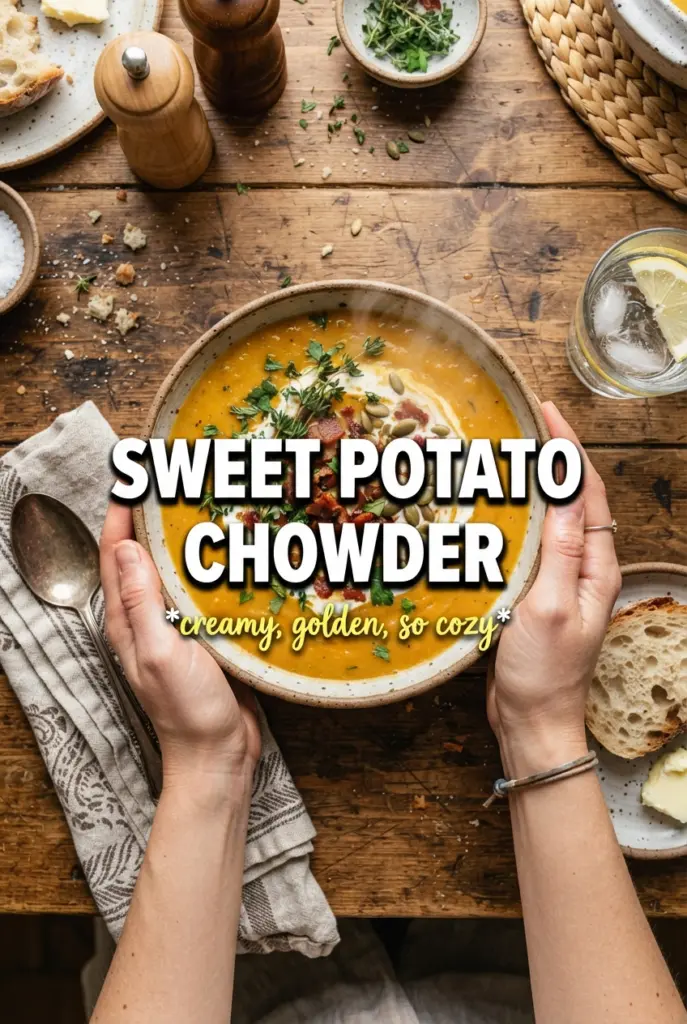
Sweet potato chowder turns thick, silky, and satisfying when the potatoes break down just enough to give the broth body without turning the whole pot into puree. The sweet corn, smoky bacon, and a little chipotle keep it from leaning too soft or one-note, and that balance is what makes a bowl like this worth coming back to. It eats like a proper meal, not a side dish dressed up in a bigger bowl.
The trick is building flavor in stages. Bacon fat gives the onion and bell pepper a head start, then the spices toast for a minute before the broth goes in. That small step wakes them up and keeps the chowder from tasting flat. I also like mashing only part of the sweet potatoes at the end, because it gives you that creamy texture without losing the cubes that make each spoonful feel substantial.
Below, I’ve included the little details that matter: how to get the chowder thick enough without flour, which cream swap works best, and what to do if you want to make it ahead. Those are the things that change a decent pot of soup into one you’d happily serve again.
The chowder thickened up beautifully when I mashed half the potatoes, and the lime at the end made the smoky flavor pop. My husband went back for a second bowl before I’d even sat down.
Save this sweet potato chowder for the nights when you want a smoky, creamy bowl with bacon, corn, and a bright squeeze of lime.
The Reason This Chowder Stays Creamy Instead of Turning Gluey
Sweet potato chowder can go wrong in two opposite directions: too thin and brothy, or too thick and heavy. The fix here is to let the potatoes do the work. Once they’re tender, mashing only about half of them gives the broth a naturally creamy body without needing a flour slurry or a long reduction. That keeps the texture plush, not pasty.
The other thing that matters is heat control after the cream goes in. If you boil dairy hard, it can look greasy or split at the edges. Keep the pot at a gentle simmer, and stir long enough for the starch from the potatoes to mingle with the broth and cream. That’s what gives you a spoon-coating chowder instead of a loose soup.
- Sweet potatoes — These are the backbone of the soup. Cubing them evenly helps them cook at the same pace, and the starchy ones break down enough to thicken the chowder without help.
- Bacon — This is optional in theory, but it adds the smoky, salty depth that makes the pot taste finished. If you skip it, use olive oil and add a pinch more smoked paprika plus a little salt at the end.
- Heavy cream or coconut cream — Heavy cream gives the richest, most classic finish. Coconut cream works well if you want dairy-free chowder, and it holds up nicely with the smoked spices. Use the thick part from a chilled can if you’re going that route.
- Smoked paprika, cumin, and chipotle powder — These spices make the chowder taste layered instead of sweet and bland. Chipotle adds heat, so start with the measured amount and don’t chase it with more unless you want a stronger kick.
What Each Ingredient Is Actually Doing in This Recipe
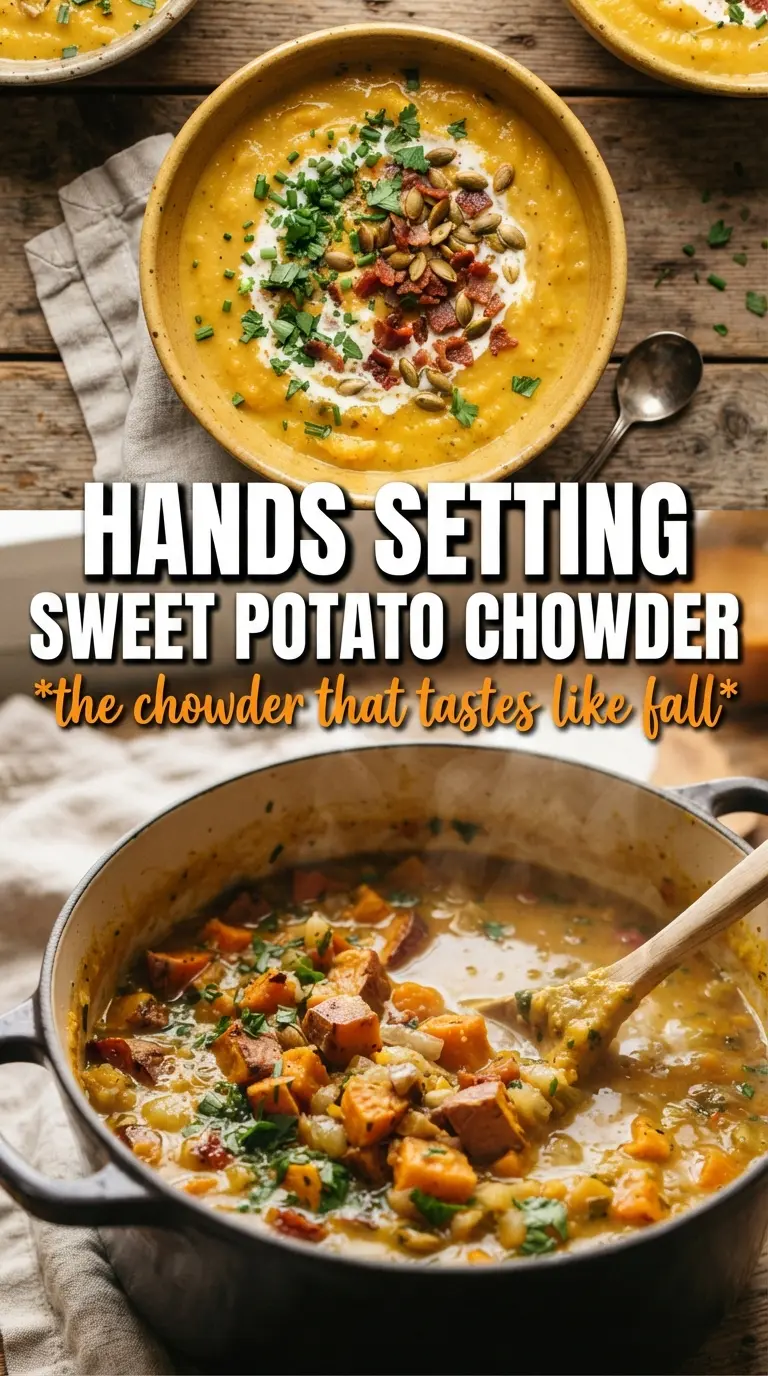
- Primary ingredient (the star) — Quality matters most. Choose the best you can find.
- Cooking medium (oil, butter, or broth) — This carries flavors and prevents dryness.
- Seasonings (salt, pepper, spices, herbs) — Layer flavors so nothing overpowers. Build depth gradually.
- Aromatics (garlic, onion, herbs) — Cook with fat to bloom flavors. Become the foundation.
- Supporting ingredients — Complement the main ingredient without overpowering it.
- Sauce or liquid (if applicable) — Brings flavors together. Balance richness with acid.
- Acid (lemon, vinegar, wine, or other) — Brightens and prevents flat-tasting results.
- Final finish (garnish, glaze, or sauce) — Prevents one-dimensional taste and adds visual appeal.
Building the Pot in the Right Order
Rendering the Bacon and Softening the Vegetables
Cook the diced bacon over medium heat until the pieces are crisp and the fat has rendered out. Pull the bacon out before it burns; you want the fat, not bitter little shards. Add the onion and bell pepper to that fat and cook until the onion turns translucent and the pepper softens at the edges. If the pan looks dry, the bacon may not have rendered much, and you can add a small splash of oil before the vegetables go in.
Blooming the Spices
Stir in the garlic, smoked paprika, cumin, and chipotle powder and cook for about a minute. The mixture should smell warm and smoky, not raw or sharp. This step matters because dry spices need heat and fat to open up. If they sit too long, they can scorch, so keep them moving and add the broth as soon as they smell fragrant.
Cooking the Sweet Potatoes Until They Yield
Add the broth and sweet potatoes, bring the pot to a boil, then lower it to a steady simmer. Cook until the sweet potatoes are tender enough to mash against the side of the pot with almost no resistance, usually around 20 to 22 minutes. If your cubes are much larger than 1-inch pieces, they’ll take longer and the texture can get uneven. Cut them close to the same size so they finish together.
Finishing for Texture, Not Just Thickness
Mash about half the potatoes right in the pot with a potato masher or the back of a spoon. Leave some cubes whole so the chowder still has body and bite. Stir in the cream and corn, then simmer a few minutes more just until the corn is hot and the soup looks unified. Add salt and pepper at the end, then finish with the reserved bacon, chives, and a squeeze of lime.
How to Adapt This for Different Kitchens and Different Eaters
Dairy-Free Version with Coconut Cream
Swap the heavy cream for full-fat coconut cream. It makes the chowder a little silkier and adds a faint sweetness that works with the sweet potatoes, corn, and chipotle. Use lime at the end to keep the coconut from tasting heavy.
Vegetarian Chowder Without Bacon
Skip the bacon and start the vegetables in olive oil or butter. Add an extra pinch of smoked paprika and a small pinch of salt earlier in the cook to replace some of the savory depth you lose from the bacon fat. The result is lighter but still full-bodied.
Thicker Chowder Without Flour
Mash closer to two-thirds of the sweet potatoes instead of half. That gives you a denser, spoon-hugging bowl without changing the flavor. Don’t add flour unless you need to, because the potatoes already give you all the thickening you need here.
Using Frozen or Canned Corn
Frozen corn is the easiest swap and usually the best one because it keeps a fresh pop. Canned corn works too, but drain it well so the chowder doesn’t pick up extra liquid. Add either one only at the end so it stays sweet and doesn’t turn dull from overcooking.
Storage and Reheating
- Refrigerator: Store in an airtight container for up to 4 days. It thickens as it chills because the potatoes keep absorbing liquid.
- Freezer: It freezes, but the texture is better if you freeze it before adding the cream. Stir in the cream after reheating for the smoothest result.
- Reheating: Warm it gently on the stove over low heat, stirring often. If it looks too thick, add a splash of broth or water. Don’t boil it hard, or the cream can separate and the potatoes can turn grainy.
Answers to the Questions Worth Asking
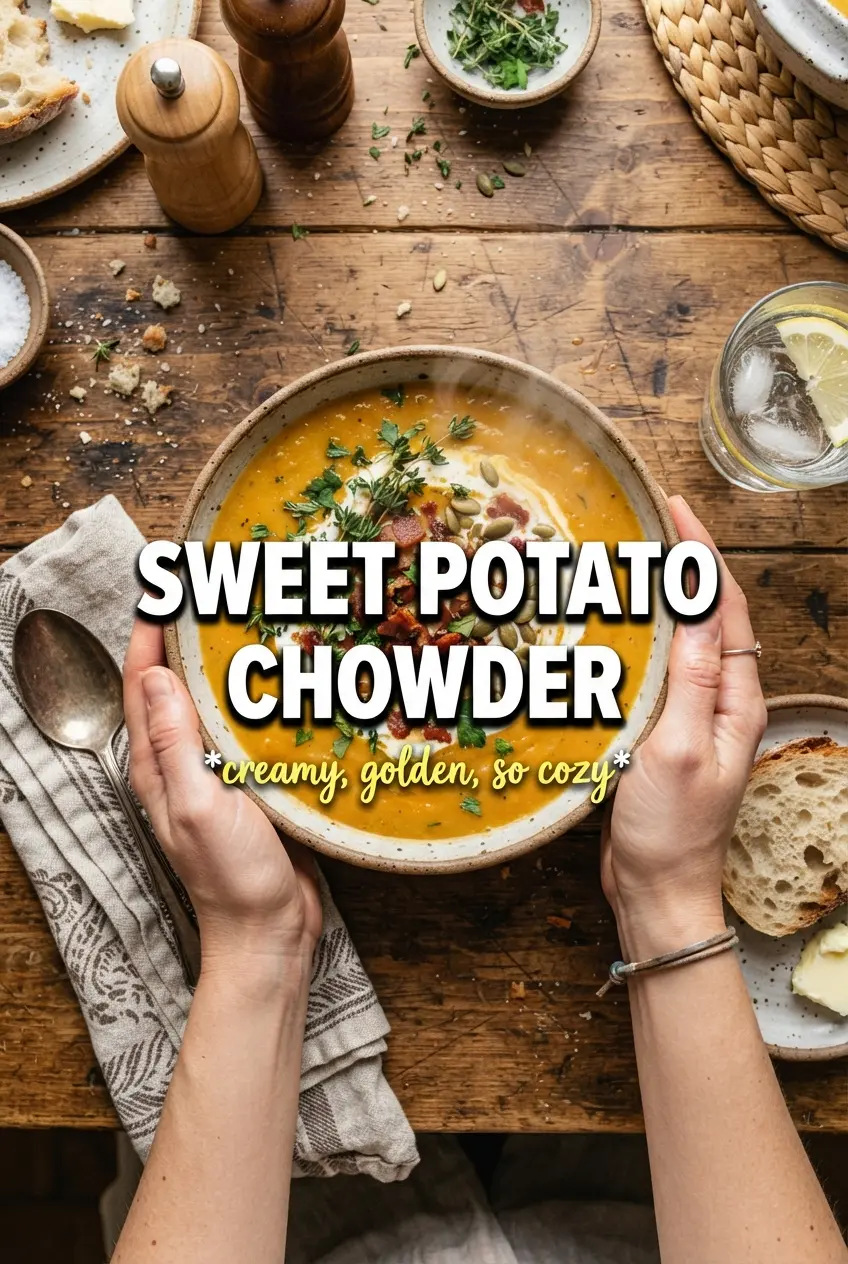
Sweet Potato Chowder
Ingredients
Equipment
Method
- Cook the diced bacon in a large pot over medium heat until crispy, about 8-10 minutes, then remove to a plate and leave the fat in the pot.
- Sauté the diced onion and bell pepper in the bacon fat for 4-5 minutes until softened and fragrant.
- Add the minced garlic and cook for 1 minute, stirring, until aromatic and lightly golden.
- Stir in the smoked paprika, cumin, and chipotle powder and cook for 1 minute to bloom the spices.
- Add the broth and cubed sweet potatoes, bring to a boil, then reduce to a steady simmer and cook for 20-22 minutes until the sweet potatoes are tender.
- Mash about half the sweet potatoes in the pot until the mixture looks slightly thickened and creamy.
- Stir in the heavy cream or coconut cream and the corn kernels until well combined.
- Simmer for 5 more minutes, then season with salt and pepper to taste.
- Ladle the chowder into bowls and top with the reserved bacon, chives, and lime wedges.