
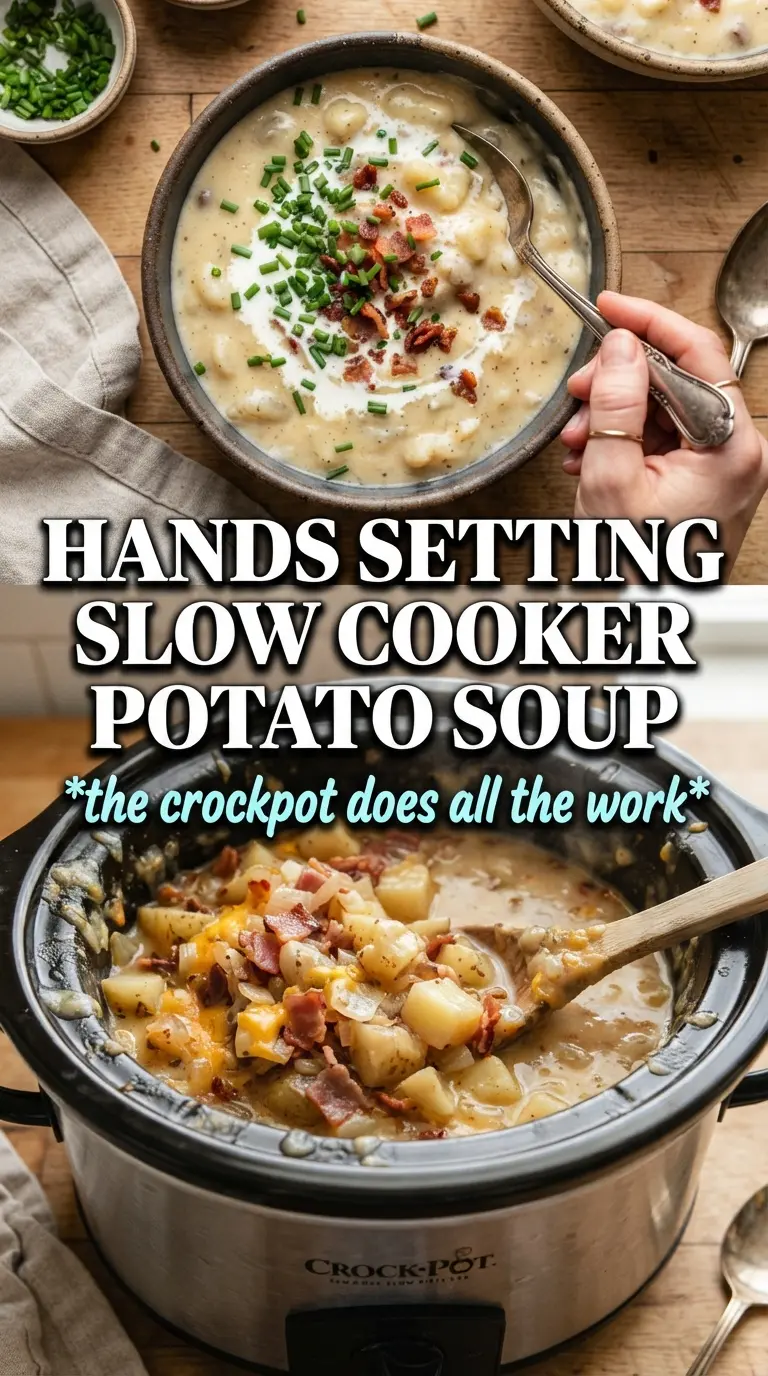
Creamy slow cooker potato soup lands in that perfect middle ground between hearty and comforting, with tender potato chunks suspended in a thick, rich base that tastes like it simmered all afternoon because it did. The best versions don’t turn gluey or bland; they stay spoonable, well-seasoned, and just rustic enough that every bowl feels like a meal.
This version gets its body from russet potatoes, which break down just enough to thicken the soup without turning it into paste, and from cream cheese added near the end so it melts smoothly instead of separating. The onion, garlic, broth, and simple seasonings build a solid savory base early, then cheddar and cream finish it with that familiar baked-potato-shop flavor everyone expects from a good potato soup.
Below, I’ll walk you through the step that matters most if you want the texture right, plus the easiest way to adjust the soup if you like it chunkier or smoother. I’ve also included a few practical swaps and storage notes, because this is one of those soups that earns its keep for lunches all week.
The potatoes got perfectly tender after 6 hours, and mashing just part of the soup gave it that thick, cozy texture without turning it into baby food. I added the cheese at the end like you said and it stayed smooth.
Creamy slow cooker potato soup with tender chunks and a rich cheddar finish belongs in your Pinterest dinner board for cold nights and easy leftovers.
The Reason This Soup Stays Creamy Instead of Turning Gluey
The big mistake with potato soup is cooking the potatoes hard and then overworking them. Russets break down fast, which is exactly what you want for body, but if you blend the whole pot you’ll get a texture that feels thick in the wrong way. Partially mashing gives you a creamy base with enough chunks left to keep each spoonful interesting.
The other point that matters is when the dairy goes in. Cream cheese and heavy cream belong at the end, after the potatoes are tender, because high heat can make the dairy look grainy or greasy. Stir them in slowly and give the cream cheese time to melt completely before adding the cheddar. That’s how you get a smooth soup instead of a broken one.
- Russet potatoes — These are the right potatoes for this soup because they soften enough to thicken the broth naturally. Yukon Golds work if that’s what you have, but the soup will stay a little silkier and less fluffy.
- Cream cheese — This is what gives the soup its body and that slightly tangy, rich finish. Cube it first so it melts evenly instead of sitting in little lumps at the bottom of the pot.
- Heavy cream — This smooths out the texture without thinning the soup. Half-and-half works in a pinch, but the finished bowl won’t taste as lush.
- Cheddar — Use a sharp cheddar if you want the flavor to stand up to the potatoes. Pre-shredded cheese will work, but freshly shredded melts better and gives you a cleaner finish.
- Chicken broth — This is the savory backbone of the soup, so use one that tastes good on its own. If you want a meatless version, swap in vegetable broth and season a little more assertively.
What Each Ingredient Is Actually Doing in This Recipe
- Primary ingredient (the star) — Quality matters most. Choose the best you can find.
- Cooking medium (oil, butter, or broth) — This carries flavors and prevents dryness.
- Seasonings (salt, pepper, spices, herbs) — Layer flavors so nothing overpowers. Build depth gradually.
- Aromatics (garlic, onion, herbs) — Cook with fat to bloom flavors. Become the foundation.
- Supporting ingredients — Complement the main ingredient without overpowering it.
- Sauce or liquid (if applicable) — Brings flavors together. Balance richness with acid.
- Acid (lemon, vinegar, wine, or other) — Brightens and prevents flat-tasting results.
- Final finish (garnish, glaze, or sauce) — Prevents one-dimensional taste and adds visual appeal.
How to Build the Soup So It Thickens at the Right Time
Loading the Slow Cooker
Add the potatoes, onion, garlic, broth, and seasonings straight into the slow cooker. The potatoes should be mostly submerged, but don’t worry if the tops peek out a little; they’ll soften as the heat builds. If the broth level is far below the potatoes, the soup can cook unevenly, so the liquid should come close to covering everything.
Waiting for the Potatoes to Collapse
Cook on Low for 6 to 8 hours until the potatoes are very tender and break apart when pressed with a spoon. High heat works in a pinch, but low heat gives the potatoes time to soften evenly without the edges falling apart before the centers are done. If the potatoes still feel firm in the middle, the soup won’t mash cleanly and the final texture will stay thin.
Mashing for Body, Not Purée
Use a potato masher to partially mash the soup right in the slow cooker. Stop when you have a mix of chunks and thickened broth, because that broken-up potato is what gives the soup its naturally creamy texture. If you mash too much, the soup can turn pasty instead of hearty.
Finishing with Dairy and Cheese
Stir in the cream cheese and heavy cream until the cream cheese disappears into the soup. Then add the cheddar and stir until it melts completely. If the soup is too hot and the cheese looks stringy or grainy, take the slow cooker off the heat for a few minutes and stir again; cheese behaves better when it melts gently.
Three Smart Ways to Adjust This Potato Soup
Make It Gluten-Free Without Changing the Texture
This soup is naturally gluten-free as written as long as your broth is certified gluten-free. The texture doesn’t need flour to thicken because the potatoes and cream cheese do that work for you. That’s one of the reasons this soup holds up so well.
Skip the Dairy and Still Get a Creamy Bowl
For a dairy-free version, use unsweetened coconut cream or a plain dairy-free creamer and swap the cream cheese for a dairy-free alternative that melts well. The flavor will be a little less tangy and the soup won’t have quite the same richness, but the potato base still makes it satisfying.
Turn It Into a Bigger Meal
Stir in shredded cooked chicken or crispy bacon at the end if you want more protein in the bowl. Bacon adds salt and smoky depth, so if you use it inside the soup, cut back slightly on the added salt until you taste the finished pot. The toppings still matter here; they give each bowl contrast and keep the soup from tasting one-note.
Storage and Reheating
- Refrigerator: Store in an airtight container for up to 4 days. It will thicken as it chills, so expect a denser texture the next day.
- Freezer: You can freeze it, but dairy-based potato soup can separate a little when thawed. If you freeze it, leave off the toppings and reheat gently.
- Reheating: Warm it over low heat on the stove, stirring often and adding a splash of broth or milk if needed. Don’t boil it, or the dairy can split and the potatoes can turn grainy.
Answers to the Questions Worth Asking

Slow Cooker Potato Soup
Ingredients
Equipment
Method
- Add russet potatoes, onion, garlic, chicken broth, salt, black pepper, garlic powder, and onion powder to the slow cooker and stir to combine. Ensure the potatoes are mostly submerged in the broth so they cook evenly.
- Cook on Low for 6-8 hours until the potatoes are very tender, or cook on High for 3-4 hours. The soup is ready when you can easily break a potato chunk apart with a spoon.
- Use a potato masher to partially mash the soup to your desired consistency, leaving some chunks intact. This creates a thick, creamy body without turning the soup fully smooth.
- Stir in cream cheese and heavy cream, then continue stirring until the cream cheese melts completely. Look for the mixture to turn glossy and smooth with no visible cream cheese lumps.
- Add shredded cheddar and stir until melted, then taste and adjust seasoning. Stop when the cheese is fully incorporated and the soup looks thick and pourable.
- Ladle the potato soup into bowls and top with sour cream, extra cheddar, bacon bits, and green onions. Serve immediately while the cheddar and toppings look fresh and bright.