

Golden chicken stew needs a slow cooker, not a pot on the stove. The long, gentle heat turns bone-in thighs into tender shreds while the potatoes and carrots soak up the broth and thicken the whole thing into a bowlful that feels finished, not thin or watery. The best versions have body, depth, and vegetables that still taste like themselves.
This version works because the chicken cooks on top of the vegetables, so the drippings fall straight into the broth instead of stewing the meat into mush from the start. Cream of chicken soup and tomato paste give the gravy a richer base than plain broth alone, and the cornstarch slurry goes in at the end, after the stew has already developed flavor, so the texture turns glossy instead of pasty. Bone-in thighs matter here too; they stay juicy through the long cook and give the broth more real chicken flavor than breasts usually do.
Below, you’ll find the timing that keeps the vegetables intact, the point where the stew should thicken, and a few simple swaps if you want to adjust it for what you have on hand.
The gravy thickened up beautifully after the cornstarch slurry, and the chicken thighs were falling apart after 6 hours on low. My husband went back for a second bowl and asked if I could put this on the meal plan again next week.
Save this slow cooker chicken stew for the nights when you want tender chicken, chunky vegetables, and a gravy that thickens right in the crockpot.
The Trick to Keeping the Chicken Tender and the Vegetables Intact
The biggest mistake with slow cooker stew is tossing everything in together and walking away. Chicken thighs can handle long heat, but potatoes and carrots turn mushy if they sit too low in too much liquid for too long. Layering the vegetables on the bottom gives them a head start, while the chicken sits above them and flavors the broth as it cooks.
The other thing that separates a good stew from a heavy one is when you thicken it. Cornstarch needs a hot liquid and a little time to activate, so adding it at the start can leave you with a dull, gluey texture. Stir it in at the end, then give the stew 20 minutes on high until the broth turns silky and coats the spoon.
What Each Ingredient Is Actually Doing in This Stew
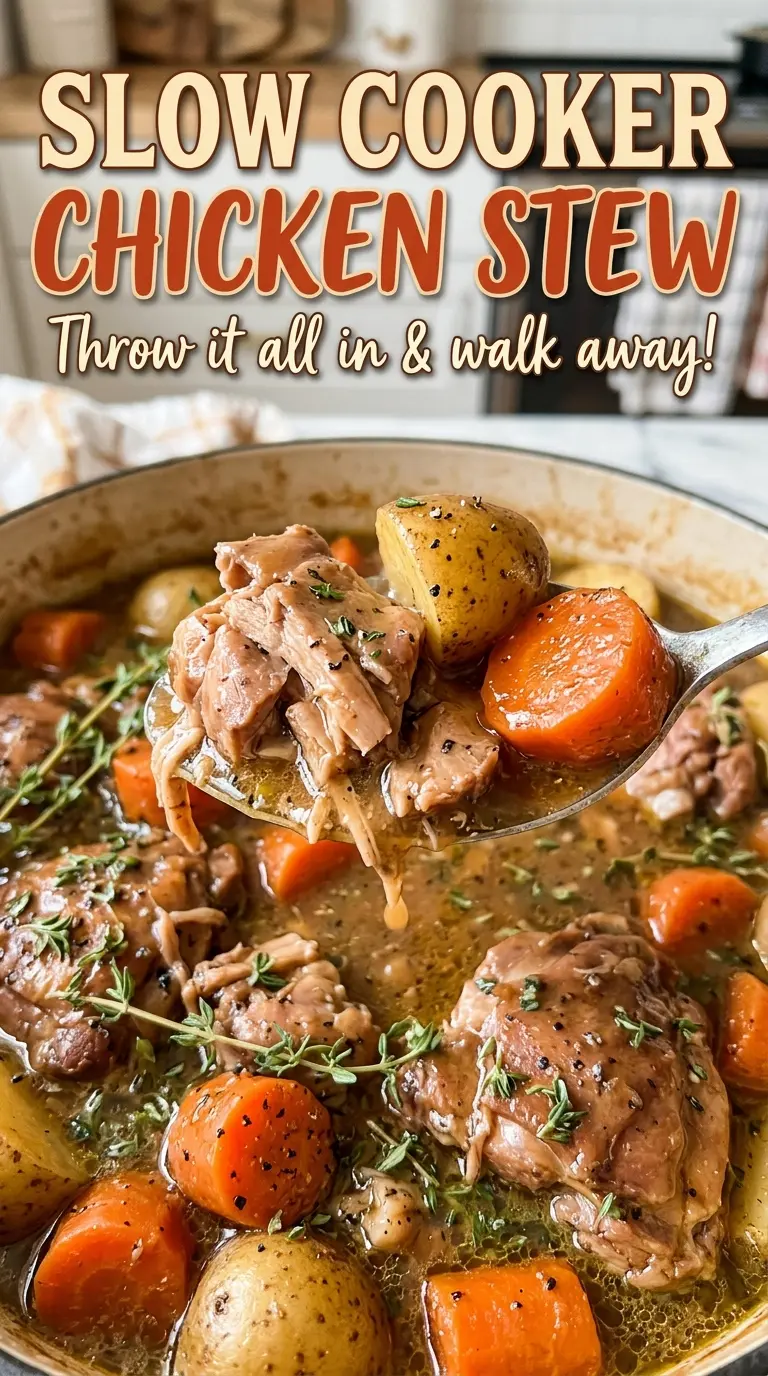
- Bone-in chicken thighs — These hold up to the long cook and give the stew a deeper, richer broth than boneless breasts. If you use boneless thighs, shorten the cook a bit so they don’t go stringy.
- Baby potatoes — Their waxy texture keeps them from collapsing. Cut them in half so they cook through at the same pace as the carrots without turning mealy.
- Carrots, celery, and onion — This is the vegetable base that gives the broth sweetness and backbone. Cut the carrots thick enough to survive six hours, or they’ll disappear into the gravy.
- Cream of chicken soup — It adds body and a built-in savory creaminess that plain broth can’t provide. If you swap it out, the stew will taste thinner unless you replace that richness another way.
- Tomato paste — A small amount deepens the flavor and keeps the stew from tasting flat. Cooked into the broth, it doesn’t make the stew taste tomatoey; it just adds a little warmth and color.
- Cornstarch slurry — This is what turns the broth into gravy. Mix it with cold water first so it disperses cleanly instead of clumping in the slow cooker.
The 20 Minutes That Change the Whole Texture
Building the Bottom Layer
Start with the potatoes, carrots, celery, and onion in the bottom of the slow cooker. They need to sit in the broth and soften first, but they also need enough structure left at the end to feel like stew, not baby food. Pile the chicken on top instead of burying it so the meat stays juicy while the vegetables cook in the liquid below.
Letting the Chicken Poach in the Broth
Once the garlic, broth, cream of chicken soup, tomato paste, thyme, rosemary, and bay leaf are in, cook the stew low and slow until the chicken is very tender. Low gives the flavors time to meld without breaking down the vegetables too fast. If you rush this on high, the chicken may still be fine, but the potatoes can go soft around the edges before the center is ready.
Shredding, Thickening, and Finishing
Pull out the chicken, discard the skin and bones, and shred the meat while the stew stays hot. Remove the bay leaf before you add the cornstarch slurry, then stir it in and cook on high for about 20 minutes. The stew should look glossy and thick enough to coat a spoon; if it still seems loose, give it a few more minutes before returning the chicken and seasoning with salt, pepper, and parsley.
What to Change When You Need a Different Version
Make It Dairy-Free
Use a dairy-free cream soup substitute or replace the canned soup with an extra cup of broth and 1/2 cup full-fat coconut milk at the end. The stew will still thicken, but the flavor gets lighter and less savory than the original.
Swap in Boneless Chicken Thighs
Boneless thighs work well if that’s what you have, but they cook faster and lose their texture if left too long. Check them closer to the 5-hour mark on low and shred as soon as they’re tender.
Make It Gluten-Free
Use a certified gluten-free cream soup and check that your broth is gluten-free too. The cornstarch slurry already fits the recipe, so the final texture stays the same.
Add More Vegetables Without Diluting the Stew
Add mushrooms or peas near the end instead of at the beginning. Mushrooms can handle a longer cook, but peas need only a few minutes or they’ll lose their color and turn soft.
Storage and Reheating
- Refrigerator: Store for up to 4 days. The stew will thicken as it chills, so it may look almost too firm straight from the fridge.
- Freezer: It freezes well for up to 3 months. Cool it fully, portion it into airtight containers, and leave a little room at the top for expansion.
- Reheating: Warm it gently on the stove or in the microwave with a splash of broth if needed. High heat can make the chicken tougher and the gravy break into an oily layer.
Answers to the Questions Worth Asking

Slow Cooker Chicken Stew
Ingredients
chicken thighs
- 2 lb bone-in chicken thighs
baby potatoes
- 1 lb baby potatoes, halved
carrots
- 3 carrots, cut into thick rounds
celery
- 3 celery, sliced
onion
- 1 onion, diced
garlic
- 4 garlic, minced
chicken broth
- 2 cup chicken broth
cream of chicken soup
- 1 can (10.5 oz) cream of chicken soup
tomato paste
- 2 tbsp tomato paste
dried herbs
- 1 tsp dried thyme
- 1 tsp dried rosemary
- 1 bay leaf
cornstarch slurry
- 3 tbsp cornstarch
- 3 tbsp water
garnish and seasoning
- 1 fresh parsley for serving
- 1 salt and pepper to taste
Equipment
- 1 slow cooker
Instructions
Layer the stew
- Place baby potatoes, carrots, celery, and onion in the bottom of the slow cooker. Spread them into an even layer so everything cooks at the same pace (visual cue: vegetables visible across the base).
- Nestle bone-in chicken thighs on top of the vegetables. Tuck them in snugly so they stay in contact with the cooking liquid (visual cue: chicken fully covers the center).
- Add garlic, chicken broth, cream of chicken soup, tomato paste, dried thyme, dried rosemary, and bay leaf over the top. Ensure most of the herbs are surrounded by liquid (visual cue: tomato paste streaks disappear into the broth).
Slow cook until tender
- Cook on Low for 6-8 hours, until the chicken thighs are very tender. Check for doneness when meat pulls easily with a fork (visual cue: thighs look swollen and soft).
Shred and thicken
- Remove the chicken from the slow cooker and discard the skin and bones. Shred the meat into bite-size pieces (visual cue: chicken becomes fluffy strands).
- Remove the bay leaf, then stir the cornstarch slurry into the stew. Keep stirring until fully combined (visual cue: slurry disappears and the broth looks slightly cloudy).
- Cook on High for 20 minutes to thicken. Look for a gravy-like consistency that coats the back of a spoon (visual cue: stew thickens noticeably).
- Return the shredded chicken to the slow cooker and season with salt and pepper to taste. Stir gently to distribute (visual cue: chicken is evenly speckled throughout).
- Garnish with fresh parsley for serving right before serving. Finish with a fresh green pop (visual cue: parsley sprinkled over the top).