
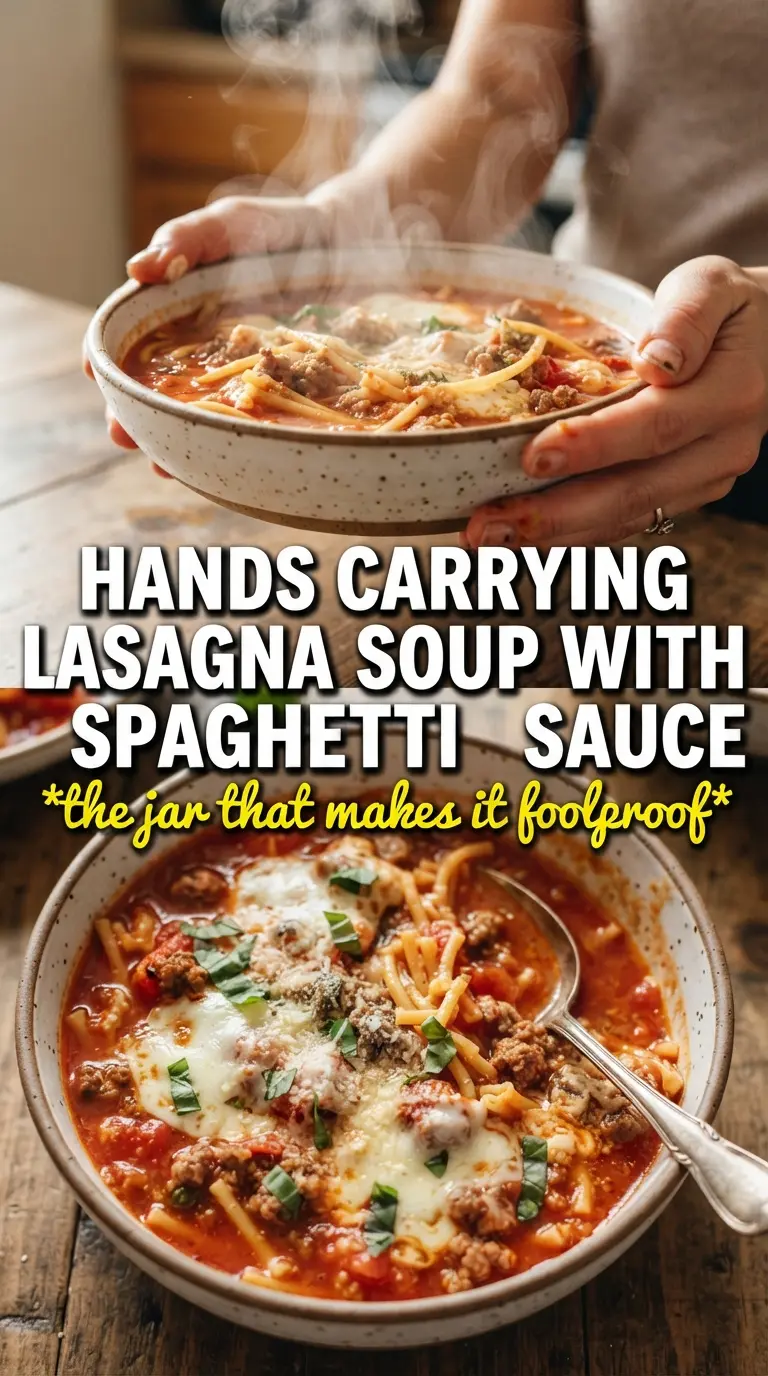
Lasagna soup gets its comfort-food magic from the same place a pan of baked lasagna does: rich meat sauce, tender noodles, and a creamy cheese finish. The difference here is speed. A jar of spaghetti sauce does the heavy lifting, and the broth turns it into something spoonable without losing that familiar tomato-and-herb depth. You still get all the parts people want from lasagna, just in a bowl that comes together fast enough for a weeknight.
The key is treating the jarred sauce like a base, not a shortcut you just dump and hope for the best. Browning the sausage or beef first gives the broth a deeper savory backbone, and the onion and garlic soften the edge of the sauce so it tastes cooked, not canned. Breaking the lasagna noodles into rough pieces keeps the texture rustic and helps every bite catch some of the broth and cheese.
Below, I’ve included the timing that keeps the noodles from going mushy, the cheese combo that gives you that ricotta-lasagna finish, and a few smart swaps if you need to work with what’s already in your pantry.
The noodles stayed tender without falling apart, and the ricotta-mozzarella topping melted into the soup exactly like a baked lasagna layer. My husband went back for seconds and asked me to keep this one in rotation.
Save this lasagna soup with spaghetti sauce for the nights when you want cozy, cheesy comfort without layering a whole pan of lasagna.
The Part That Keeps the Noodles from Turning to Mush
The biggest mistake with soup-style pasta is letting the noodles sit in the pot too long after they’re tender. Lasagna noodles keep absorbing liquid, and once they cross that point, they go from pleasantly soft to swollen and heavy. Add them only after the broth is already boiling, then simmer just until they lose their raw edge and still have a little bite in the center.
The other thing that matters is keeping the soup at a steady simmer, not a hard boil. A rolling boil can break the noodles apart before they finish cooking, especially since broken lasagna sheets have uneven edges. Stir occasionally so nothing sticks to the bottom, but don’t keep agitating it. That’s how the pieces stay recognizable instead of dissolving into a starchy tangle.
What the Jarred Sauce Is Doing Here, and Why It Works
- Spaghetti sauce — This is the backbone of the soup, so use a brand you already like the taste of. A good jar gives you tomato, garlic, herbs, and a little sweetness in one move. If your sauce runs sweet, the broth and diced tomatoes pull it back into balance.
- Italian sausage or ground beef — Sausage adds seasoning built right in, which gives the soup a fuller, more lasagna-like flavor. Ground beef works well too, especially if you want a milder base. Drain off excess fat after browning so the broth stays rich instead of greasy.
- Diced tomatoes — These add texture and keep the soup from tasting one-note. Use them straight from the can; don’t drain them, because that liquid helps build the broth. If you want a smoother soup, you can swap in crushed tomatoes, but you’ll lose some of the chunky, rustic feel.
- Ricotta, mozzarella, and parmesan — This is the part that makes the bowl taste like lasagna instead of just tomato soup with pasta. Ricotta gives you creaminess, mozzarella melts into stretchy pockets, and parmesan adds salty depth. If you skip the ricotta, the topping gets thinner and less distinct.
The Simmer That Builds the Soup
Brown the Meat First
Start with a hot pot and cook the sausage or beef until it’s deeply browned, not just no longer pink. That browning is where the savory flavor starts, and it matters more here because the soup base is so simple. If there’s a lot of fat in the pot, drain it before adding the onion so the finished broth doesn’t taste heavy.
Cook the Onion and Garlic Just Until Fragrant
Let the onion soften for about three minutes, then add the garlic for one minute. You want the onion translucent at the edges and the garlic fragrant, not browned. If the garlic burns, it will flavor the whole pot with bitterness, and there’s no fixing that later.
Build the Broth and Season It Early
Stir in the spaghetti sauce, diced tomatoes, broth, Italian seasoning, basil, and red pepper flakes before the noodles go in. This gives the broth a chance to taste like one unified soup instead of layered ingredients floating together. Bring it to a boil first so the noodles start cooking immediately when they hit the pot.
Finish with the Noodles and Cheese
Add the broken lasagna noodles and simmer until they’re tender, usually 10 to 12 minutes. Taste before you salt, because jarred sauce and broth both bring their own seasoning. Spoon the soup into bowls and top each one with a generous dollop of the ricotta mixture so it melts slightly into the hot broth instead of disappearing into the pot.
How to Change This Soup Without Losing the Lasagna Feel
Make it sausage-forward
Use Italian sausage instead of ground beef if you want a deeper, more seasoned broth with less work. It brings fennel, garlic, and spice into the pot automatically, which makes the soup taste closer to a baked lasagna filling. Mild or hot both work, depending on how much kick you want.
Go gluten-free with a pasta swap
Use your favorite gluten-free lasagna-style pasta or short gluten-free noodle in place of the regular noodles. Cook it just until tender, because gluten-free pasta tends to soften fast once it sits in hot broth. If the pasta brand is delicate, you may want to cook it separately and add it to each bowl.
Make it dairy-free
Skip the ricotta topping and finish the bowls with a spoonful of dairy-free cashew cream or a sprinkle of dairy-free mozzarella-style shreds. You’ll lose some of the classic lasagna richness, but the soup will still have the tomato, herb, and pasta comfort people want. Add a little extra olive oil at the table if you need more body.
Make it ahead for a crowd
Cook the soup base without the noodles, then add the pasta right before serving. That keeps the noodles from soaking up the broth and turning soft while the soup waits on the stove. This is the best way to serve it for a party or potluck.
Storage and Reheating
- Refrigerator: Store for up to 4 days. The noodles will keep soaking up broth, so expect the soup to thicken as it sits.
- Freezer: Freeze the soup base without noodles for the best texture. Pasta in frozen soup tends to get soft and grainy after thawing.
- Reheating: Warm gently on the stove over medium-low heat, adding a splash of broth or water to loosen it. If the noodles are already in the soup, heat just until hot so they don’t break down.
Answers to the Questions Worth Asking

Lasagna Soup With Spaghetti Sauce
Ingredients
Equipment
Method
- Heat a large pot over medium-high heat and brown the Italian sausage or ground beef until cooked through, then drain off excess fat.
- Add the diced onion and sauté for 3 minutes, stirring, until slightly softened.
- Add the minced garlic and cook for 1 minute, stirring constantly, until fragrant.
- Pour in the spaghetti sauce, diced tomatoes, and beef or chicken broth, then add Italian seasoning, dried basil, and red pepper flakes.
- Bring the mixture to a boil over medium-high heat.
- Add the broken lasagna noodles and reduce to a simmer.
- Simmer for 10-12 minutes, stirring occasionally, until the noodles are tender.
- Season with salt and pepper to taste.
- Mix the ricotta, shredded mozzarella, and parmesan together for the cheese dollop.
- Ladle the soup into bowls and top each serving with a generous spoonful of the cheese dollop and fresh basil.