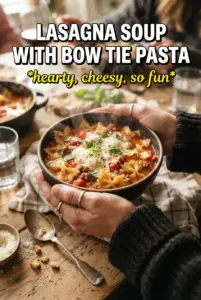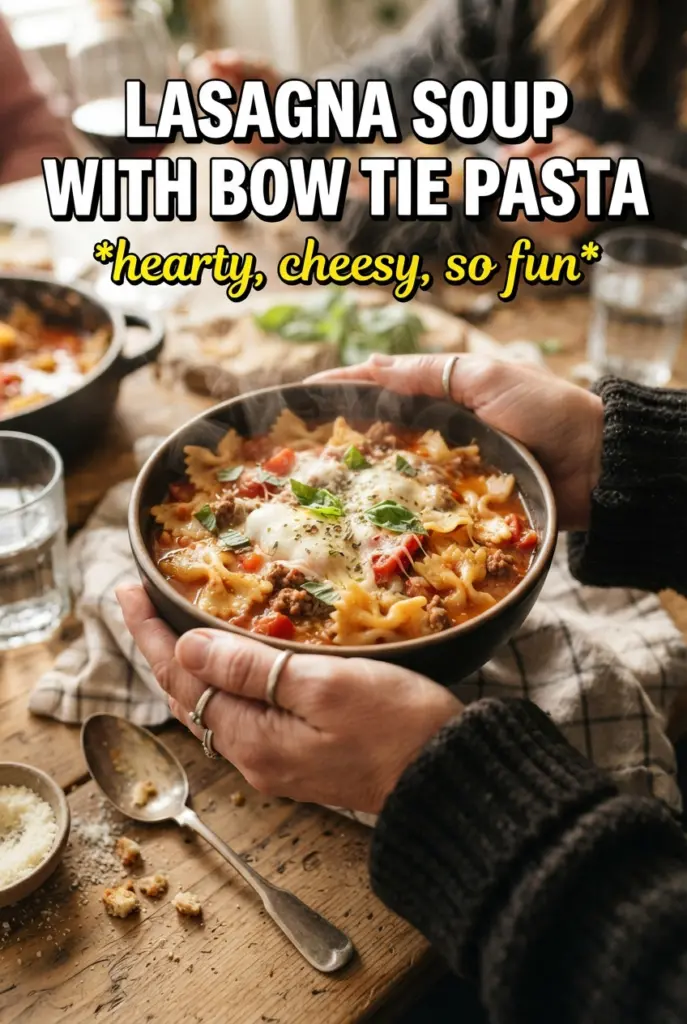
Lasagna soup with bow tie pasta gives you all the comfort of a baked pan of lasagna without the layering, waiting, or cleanup. The broth turns rich and tomato-forward, the sausage adds enough depth to keep each spoonful satisfying, and the farfalle catches the sauce in its ridges and folds so the whole bowl eats like a proper meal. The cheese dollop on top melts into the hot soup and gives you that creamy, salty finish that makes lasagna taste like lasagna.
The trick here is balance. Tomato paste gets cooked with the onions and garlic so it loses that raw edge and deepens the base before the broth goes in. The sausage brings seasoning along with the meat, so you don’t need a long list of extras to get real flavor. Farfalle is a little different from traditional noodles, though, because it drinks up broth fast. That means this soup rewards serving it promptly, or loosening it with a splash more broth if it sits.
Below you’ll find the small timing details that keep the pasta from going mushy, the cheese mixture that actually stays spoonable, and a few smart ways to adapt the pot if you want it milder, lighter, or ahead of schedule.
The tomato base was rich without tasting heavy, and the bow ties held up better than I expected. I added a little extra broth at the end and the ricotta-mozzarella topping melted into the soup perfectly.
Love the rich tomato broth and cheesy ricotta topping? Save this lasagna soup with bow tie pasta for an easy dinner that eats like comfort food without the layering.
The One Place Bow Tie Pasta Can Make Lasagna Soup Go Wrong
Lasagna soup works best when the pasta cooks in the broth, but bow ties change the game a little. Farfalle holds onto liquid at the center and along the edges, so it can go from pleasantly tender to too soft fast if you let the pot sit too long. The fix is simple: cook it until just al dente, then serve right away or keep extra broth nearby to loosen the bowl later.
The other thing that matters is the tomato base. If the tomato paste goes in with the garlic and onion and cooks for a minute or two, the soup tastes deeper and less sharp. That small step keeps the broth from tasting like crushed tomatoes poured straight from the can. Sausage helps too, because it seasons the whole pot from the start instead of relying on the cheese topping to do all the work.
- Cooking the pasta in the soup: This gives the broth that starchy, silky body, but it also means the soup thickens as it sits. If you’re not serving the whole pot at once, cook the pasta separately and add it to each bowl.
- Browned sausage: Drain off excess fat, but leave a little behind in the pot. That fat carries flavor and helps the onion soften with more depth.
- Tomato paste: This is the ingredient that makes the broth taste cooked instead of flat. Give it time in the hot pan before adding liquid so it darkens slightly and smells sweeter.
What Each Ingredient Is Doing in This Bowl
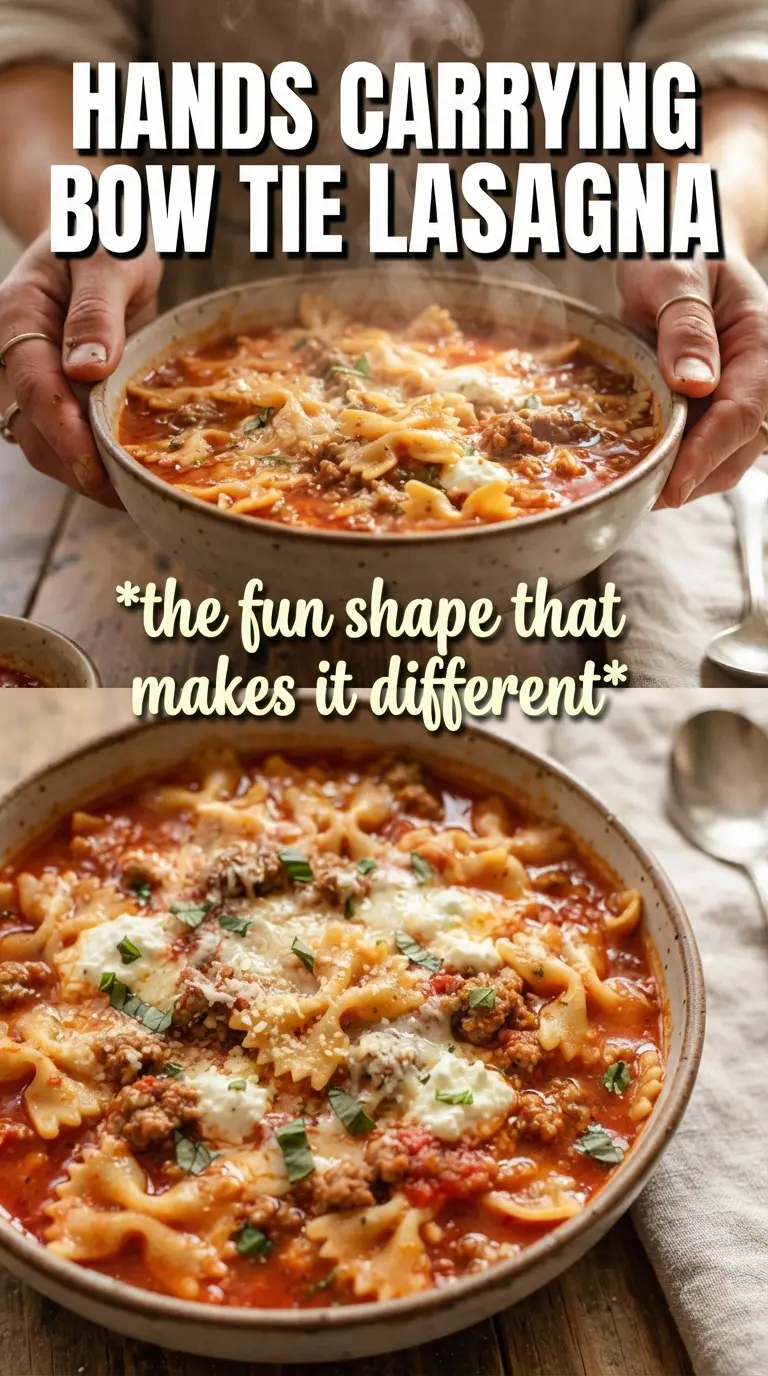
- Italian sausage: This is the backbone of the soup. Mild sausage keeps it kid-friendly, while hot sausage gives you more heat without needing extra red pepper flakes.
- Crushed tomatoes and diced tomatoes: The crushed tomatoes make the broth thick and full-bodied, while the diced tomatoes give you little bursts of texture. If you only have one type, use what you’ve got and lean on a little extra broth for balance.
- Chicken broth: This stretches the tomatoes into soup and keeps the base from tasting overly acidic. A low-sodium broth is the smarter choice here because the sausage and cheese add plenty of salt on their own.
- Farfalle: Bow ties hold sauce well and give the soup a nice bite, but they absorb more broth than lasagna noodles. Add a splash more broth if the pot tightens up before serving.
- Ricotta, mozzarella, parmesan: This mixture stands in for the creamy cheese layer in lasagna. The ricotta keeps it soft, the mozzarella melts, and the parmesan sharpens the whole bowl. Stir in a little chopped basil to make it taste fresh instead of heavy.
Building the Soup So It Tastes Like Lasagna, Not Just Tomato Pasta
Brown the Sausage First
Cook the sausage in a large pot until it loses its pink color and picks up some browned bits on the bottom. Those bits are flavor, not a problem, and they help the broth taste richer once the tomatoes go in. If there is a lot of grease in the pot, drain off most of it so the soup doesn’t end up oily.
Cook the Onion and Tomato Paste Together
Add the diced onion and let it soften for a few minutes before stirring in the garlic and tomato paste. The paste needs heat to lose its raw, tinny taste, and it should darken a shade or two as it cooks. If the garlic starts browning hard, the heat is too high and the soup will taste bitter, so keep the pot at a steady medium.
Simmer the Broth Before the Pasta Goes In
Once the tomatoes, broth, seasoning, and red pepper flakes are in, bring the pot to a boil, then lower it to a lively simmer. This lets the flavors marry before the pasta starts soaking up liquid. If you add the bow ties too early, they’ll overcook while the broth is still developing.
Finish With the Cheese Dollop
Mix the ricotta, mozzarella, parmesan, and basil in a small bowl right before serving. A generous spoonful on hot soup melts into little creamy pockets and gives you the lasagna effect in the simplest possible way. If you stir it into the whole pot, the cheese disappears; on top of each bowl, it stays distinct and makes every spoonful better.
How to Adapt This Soup for Different Nights and Different Pantries
Make It Dairy-Free
Skip the ricotta-mozzarella-parmesan topping and finish each bowl with a spoonful of dairy-free ricotta or a drizzle of good olive oil. The soup base itself is already dairy-free, so you still get the tomato-and-sausage comfort without losing the whole dish.
Use Ground Turkey or Chicken Instead of Sausage
This works, but you need to replace the seasoning sausage normally brings. Add an extra pinch of salt, a little more Italian seasoning, and a drizzle of olive oil so the soup doesn’t taste lean or flat. The result is lighter, but the broth will be less rich.
Make It Gluten-Free
Swap in a gluten-free bow tie pasta that holds its shape well and watch the simmer closely, because some gluten-free pastas soften faster than wheat pasta. If the package gives a short cook time, start checking a minute early so the noodles stay intact.
Storage and Reheating
- Refrigerator: Store for up to 4 days. The pasta will keep absorbing broth, so the soup thickens as it rests.
- Freezer: Freeze the soup without the pasta for the best texture. Cook fresh bow ties when you reheat, or the noodles will turn soft and swollen.
- Reheating: Warm it gently on the stove over medium-low heat with a splash of broth or water. High heat can split the tomato base and make the pasta break apart.
Answers to the Questions Worth Asking
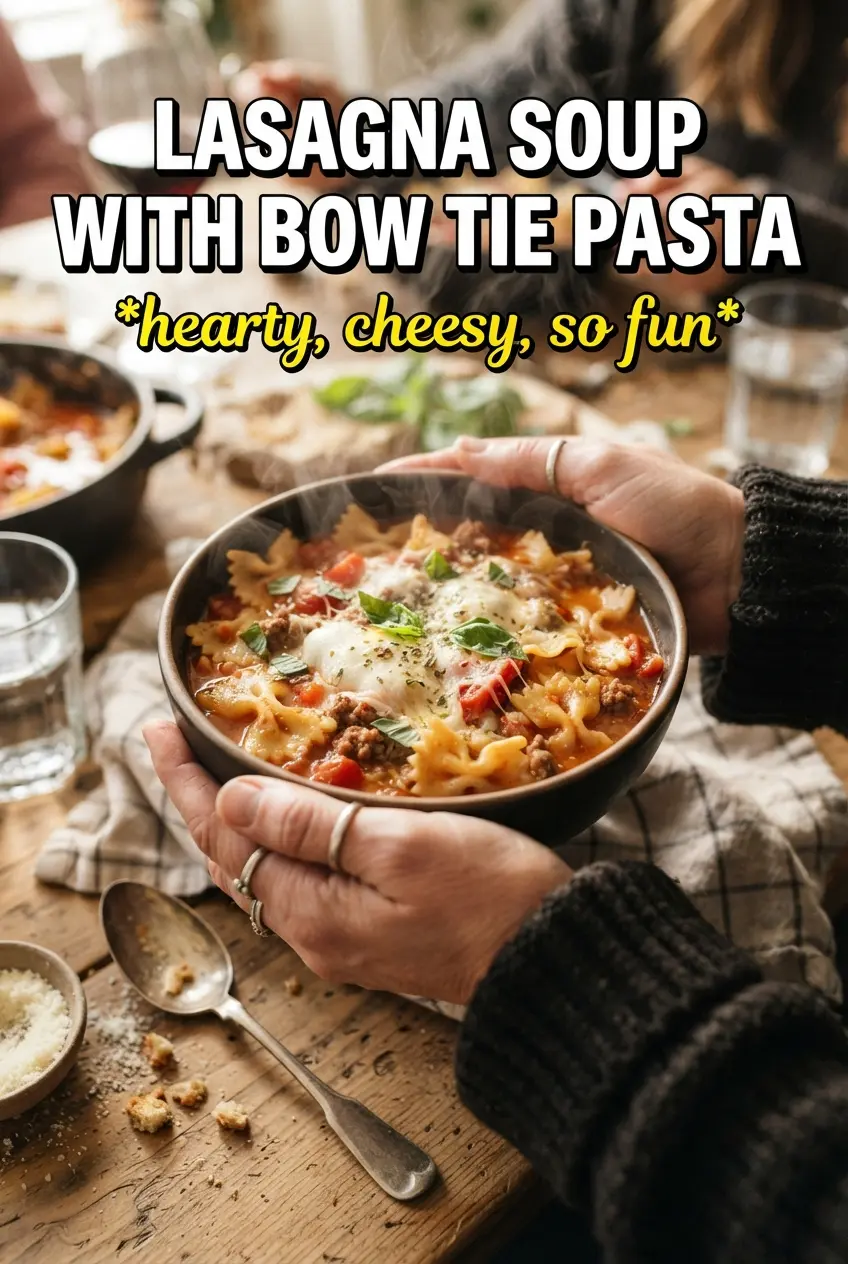
Lasagna Soup With Bow Tie Pasta
Ingredients
Equipment
Method
- Brown Italian sausage in a large pot over medium-high heat, then drain the fat.
- Sauté onion for 3 minutes, then add garlic and tomato paste and cook for 2 minutes.
- Add both crushed tomatoes and diced tomatoes, chicken broth, Italian seasoning, dried basil, and red pepper flakes, then bring to a boil.
- Add farfalle (bow tie) pasta and cook for 8-10 minutes, until al dente.
- Season with salt and pepper to taste.
- Mix ricotta, shredded mozzarella, parmesan, and fresh basil into a thick, spoonable dollop.
- Serve soup in bowls with a generous spoonful of cheese dollop on top.
- If the soup thickens too much (bow tie pasta absorbs more liquid than lasagna noodles), add extra broth to loosen before serving.