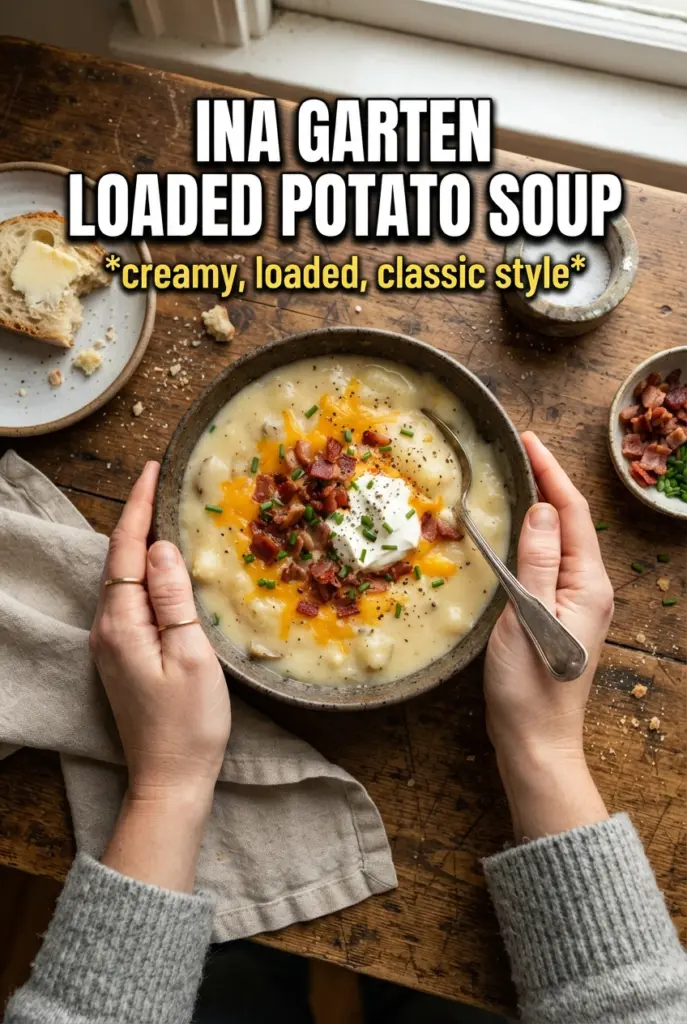
Creamy potato soup turns into something worth making on repeat when it lands with chunks of tender potato, a silky base, and just enough salty crunch on top to keep every spoonful interesting. This version has the comfort of a baked potato without feeling heavy or one-note, and that balance is what makes it stand out from the usual bland, gluey versions.
The trick is building flavor in layers instead of dumping everything into the pot at once. Crisping the pancetta first gives you fat for sautéing the onions, and that same pot picks up all the browned flavor before the broth goes in. The potatoes are cooked until they collapse easily, then only half of them get mashed so the soup stays thick without turning into paste. Parmesan and sour cream go in at the end, off the hardest heat, so the soup stays smooth instead of grainy.
Below, I’ll walk through the part that matters most: how to keep the soup creamy, not starchy, and how to finish it so the toppings actually taste like part of the bowl, not an afterthought.
The potatoes broke down just enough to thicken the soup, but there were still plenty of soft chunks, and the pancetta stayed crisp even after serving. My husband went back for a second bowl and asked if I could make it again next week.
Save this loaded potato soup for the kind of night when you want a silky bowl, crispy pancetta, and minimal cleanup.
The Starch Trap That Turns Potato Soup Gluey
Potato soup can go wrong fast when the potatoes are overworked. Once they’re fully cooked, you want just enough mashing to thicken the broth and no more. If you blend the whole pot until perfectly smooth, the potatoes release too much starch and the soup takes on that heavy, pasty texture nobody wants.
The other place people run into trouble is heat. Dairy is happiest when it’s added gently. Once the broth and half-and-half are in, a low simmer is all you need. Hard boiling can make the soup taste thin at the same time it starts to break.
- Yukon gold potatoes — These are the right choice because they’re naturally buttery and hold onto some shape after simmering. Russets will work, but they break down more and make the soup cloudier and softer.
- Pancetta or bacon — This is your first layer of seasoning. Pancetta gives a cleaner salty bite, while bacon brings more smoke. Either one works, as long as you render it until crisp so it can stand up on top of the soup instead of going limp.
- Half-and-half — This gives the soup its body without making it as rich as heavy cream. Whole milk can be used in a pinch, but the soup will be thinner. If you go that route, let the potatoes do more of the thickening.
- Sour cream and parmesan — Both add tang and depth at the end. Stir them in after the soup has simmered and the pot is off the fiercest heat so the dairy stays smooth. If the soup looks grainy here, the heat was too high.
What Each Ingredient Is Actually Doing in This Recipe

- Primary ingredient (the star) — Quality matters most. Choose the best you can find.
- Cooking medium (oil, butter, or broth) — This carries flavors and prevents dryness.
- Seasonings (salt, pepper, spices, herbs) — Layer flavors so nothing overpowers. Build depth gradually.
- Aromatics (garlic, onion, herbs) — Cook with fat to bloom flavors. Become the foundation.
- Supporting ingredients — Complement the main ingredient without overpowering it.
- Sauce or liquid (if applicable) — Brings flavors together. Balance richness with acid.
- Acid (lemon, vinegar, wine, or other) — Brightens and prevents flat-tasting results.
- Final finish (garnish, glaze, or sauce) — Prevents one-dimensional taste and adds visual appeal.
Building the Soup Base Without Losing the Creamy Texture
Crisping the Pancetta First
Start the pancetta in a cold pot and let the fat slowly render out before the pieces brown. That gives you crisp bits instead of burned ones and enough fat in the pot to soften the onions. Pull the pancetta out as soon as it’s crisp, because if it stays in the pot the whole time, it loses the texture that makes the topping worth keeping.
Softening the Onions and Blooming the Flour
Cook the onions in the rendered fat and butter until they’re soft, translucent, and just turning golden at the edges. That step adds sweetness and keeps the finished soup from tasting flat. When the flour goes in, stir it for a full couple of minutes so it loses the raw taste. If you rush this part, the soup can taste chalky instead of silky.
Simmering the Potatoes Until They Yield
Once the broth and half-and-half are in, add the potatoes and simmer until they’re easily pierced with a fork and a few pieces are starting to fall apart. That’s the point where the soup starts thickening on its own. If the heat is too high, the dairy can separate and the potatoes can break down unevenly, so keep the bubbles gentle.
Finishing With the Right Amount of Texture
Mash about half the potatoes right in the pot. That gives you body without erasing the chunks that make each spoonful feel like potato soup instead of cream sauce. Stir in the parmesan and sour cream at the end, then taste before adding the final salt. The cheese brings its own salt, and over-seasoning here is the easiest mistake to make.
What to Change When You Want a Different Bowl of Soup
Make it dairy-free without losing body
Use unsweetened oat milk or a plain dairy-free half-and-half style creamer, then finish with a plant-based sour cream if you can find one that tastes clean. The soup will be a little less rich and the parmesan note will be missing, but the potatoes still give it enough structure to work. Skip any substitute that’s overly sweet or vanilla-flavored; that’s what throws the whole pot off.
Use bacon instead of pancetta for a smokier finish
Bacon gives the soup a stronger smoke flavor and a little more richness from the fat. If you use it, keep an eye on the pot because bacon browns faster than pancetta and can go from crisp to bitter quickly. The soup will taste more rustic and a little bolder.
Make it gluten-free with a small flour swap
Use a 1:1 gluten-free all-purpose blend in place of the flour. The texture will still thicken properly because the potatoes are doing some of the work, too. Avoid using cornstarch here unless you’re comfortable adjusting on the fly, because it thickens differently and can turn a little slick if you add too much.
Storage and Reheating
- Refrigerator: Store for up to 4 days. It thickens as it chills, so expect it to look denser the next day.
- Freezer: It can be frozen, but the dairy may separate a bit on thawing. Freeze in airtight containers and thaw overnight in the fridge for the best chance of a smooth reheat.
- Reheating: Warm it slowly over low heat and add a splash of broth or milk if needed. Don’t boil it hard, or the dairy can split and the potatoes can turn grainy.
Answers to the Questions Worth Asking
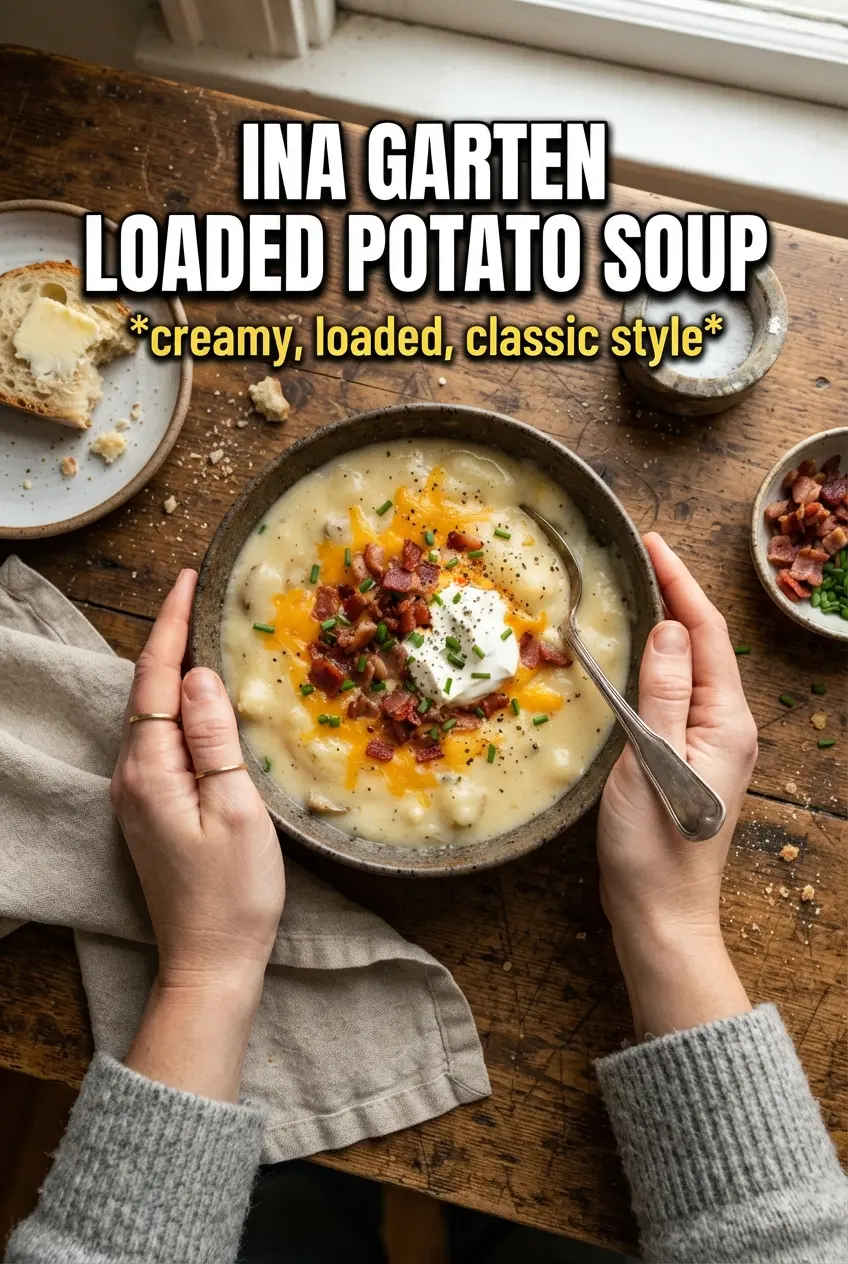
Ina Garten Loaded Potato Soup
Ingredients
Equipment
Method
- Cook pancetta in a large pot until crispy. Remove and set aside.
- Melt butter in the same pot, then sauté onions for 8 minutes until soft and golden. Keep the heat steady for even browning.
- Add garlic and cook for 1 minute. Stir constantly to prevent burning.
- Whisk in flour and cook for 2 minutes. The mixture should turn slightly pale and smell nutty.
- Gradually add chicken broth and half-and-half, whisking constantly, then bring to a simmer. Visual cue: the soup base should look smooth and slightly thickened.
- Add potatoes and cook for 20 minutes until very tender. You should be able to easily mash a cube against the pot.
- Mash about half the potatoes, then stir in parmesan and sour cream until smooth. Visual cue: the soup becomes creamy with still-visible potato chunks.
- Season with kosher salt and black pepper. Serve immediately with crispy pancetta, fresh chives, and extra parmesan.