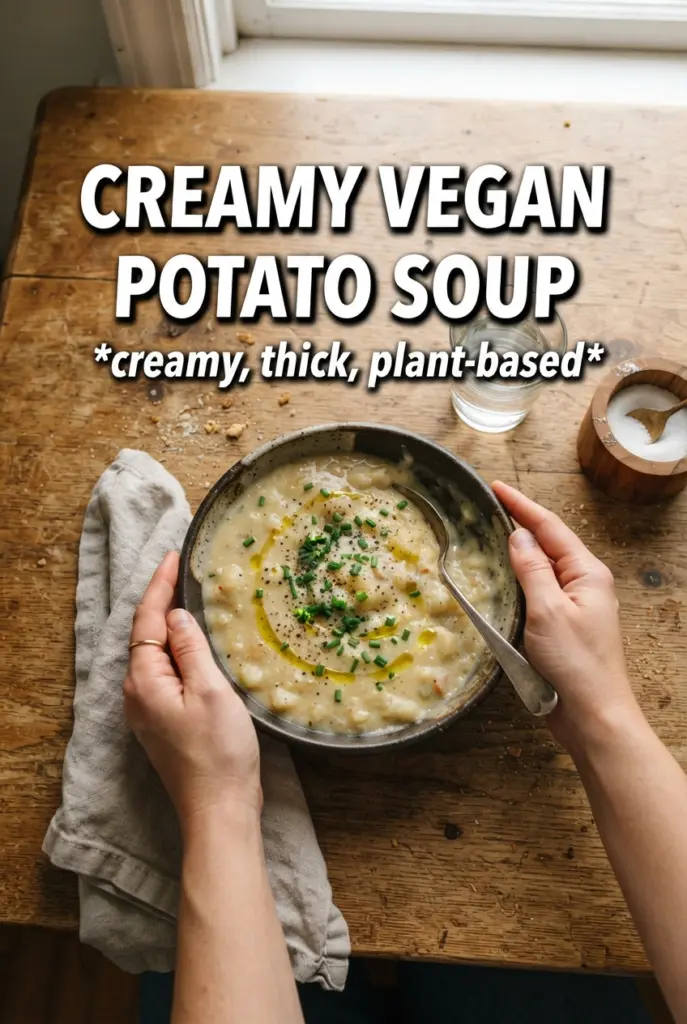
Silky, savory potato soup doesn’t need cream or butter to taste rich. The potatoes break down into a soft, velvety base, the coconut milk rounds everything out, and a squeeze of lemon keeps the whole bowl from feeling heavy. What you get is the kind of soup that tastes slow-simmered and comforting, even though it comes together in under an hour.
The trick here is layering flavor before the potatoes go in. Onion, celery, garlic, and a short bloom of smoked paprika, turmeric, garlic powder, and onion powder build a base that tastes cooked, not bland. Yukon gold potatoes matter too; they’re naturally buttery and blend into a smoother soup than starchy russets without turning gluey.
Below, I’ll walk through the part that matters most: how long to simmer the potatoes so they go completely tender, when to blend for the best texture, and how to keep the coconut milk from overpowering the rest of the pot. The crispy chickpea topping is worth keeping, too. It gives the soup just enough crunch to make each spoonful feel finished.
I was surprised how creamy this got without any dairy. The potatoes blended up completely smooth, and the lemon at the end kept it from tasting flat. Even my husband kept going back for “just one more bowl.”
Save this creamy vegan potato soup for a night when you want a silky bowl with crispy chickpeas and almost no cleanup.
The Potatoes Need to Be Fully Tender Before You Blend
The biggest mistake with potato soup is stopping too early. If the cubes still hold their shape in the center, the blender has to work harder and the soup turns grainy instead of velvety. You want the potatoes collapsing at the edge of the spoon, with no resistance when you press one against the side of the pot.
That simmer also does more than soften the potatoes. It gives the onion, celery, and spices time to melt into the broth so the soup tastes integrated instead of like broth with potatoes floating in it. If the liquid drops too fast, add a splash more broth and keep the heat at a gentle simmer, not a hard boil.
What Each Ingredient Is Actually Doing in This Bowl

- Yukon gold potatoes — These are the backbone of the soup. They’re naturally creamy and blend into a smoother texture than russets, which can turn a little gluey if they’re overworked. If you only have russets, they’ll still work, but don’t blitz them forever.
- Full-fat coconut milk — This is what gives the soup body without dairy. Use full-fat, not light, or the soup will taste thin and won’t coat the spoon the same way. The coconut flavor sits in the background once the lemon and seasonings go in.
- Nutritional yeast — It adds a savory, slightly cheesy depth that keeps the soup from tasting flat. There isn’t a true 1:1 substitute here, but a spoonful of white miso can bring in a similar umami note if you want a different direction.
- Smoked paprika and turmeric — These don’t make the soup taste smoky or spiced in a loud way. They build color and warmth, and the turmeric helps the broth turn that soft golden shade that makes the bowl look rich before you even take a bite.
- Lemon juice — Don’t skip it. The soup needs acid at the end to wake up the potatoes and coconut milk. If it tastes dull, it usually needs more salt first, then a little more lemon.
Building the Base Before the Potatoes Go In
Softening the Aromatics
Start with onion and celery in olive oil and cook them until the onion is translucent and the celery has lost its raw snap. That usually takes about five minutes over medium heat. If the heat is too high, the onion will brown before the celery softens, and the soup will taste sharper than it should.
Blooming the Spices
Stir the garlic powder, onion powder, smoked paprika, and turmeric into the hot vegetables for a minute before adding the broth. The spices should smell warm and fragrant, not burnt. This short step pulls more flavor out of the spices than tossing them into the liquid all at once.
Simmering Until the Potatoes Collapse
Add the broth and potatoes, then keep the pot at a gentle simmer for 20 to 25 minutes. You’re looking for potatoes that break apart easily when pierced with a fork. If the pot boils hard, the outside can soften before the inside catches up, which makes blending less even.
Blending for a Silky Finish
Use an immersion blender and work the soup until it’s completely smooth, especially if you want that restaurant-style texture. If you don’t have one, blend in batches carefully and leave room for steam to escape. Stir in the coconut milk and nutritional yeast after blending so the soup stays smooth and doesn’t splatter.
The Final Balance
Add the lemon juice at the end and season generously with salt and pepper. This is where the soup turns from one-note to finished. If it tastes flat, it usually needs salt before anything else; if it tastes rich but heavy, it needs more lemon.
Three Ways to Make This Vegan Potato Soup Fit What You Need
Make It Extra Thick and Spoonable
Blend only about three-quarters of the soup, then stir the rest back in. You’ll get a thicker, more rustic bowl with a little potato texture left in it. This works especially well if you want the chickpeas to stay the crunchy contrast.
Keep It Fully Dairy-Free and Coconut-Free
Swap the coconut milk for unsweetened oat cream or plain cashew cream if you don’t want any coconut flavor. Oat cream gives you a clean, neutral finish, while cashew cream makes the soup a little richer. Don’t use thin plant milk here or the texture will fall flat.
Turn It Into a Broccoli-Potato Soup Base
Add chopped broccoli during the last 8 to 10 minutes of simmering, then blend everything together. You’ll get a greener soup with a little more bite and a stronger vegetable flavor. The coconut milk still smooths it out, but the final bowl tastes fresher and less mellow.
Make the Topping Work for Gluten-Free or Higher-Protein Meals
Crispy chickpeas are already naturally gluten-free and add a little protein on top, which helps turn the soup into a more complete meal. If you want even more crunch, roast them until they’re deeply crisp and season them while they’re still warm. Soft chickpeas get soggy fast once they hit the soup.
Storage and Reheating
- Refrigerator: Store for up to 4 days. It thickens as it chills, so expect a denser texture the next day.
- Freezer: Freezes well for up to 2 months. Cool completely, portion into containers, and leave a little headspace because the soup will expand.
- Reheating: Warm it gently on the stove over low to medium-low heat, stirring often. If it seems too thick, add a splash of broth or water. Don’t boil it hard after reheating or the texture can turn a little grainy.
Answers to the Questions Worth Asking
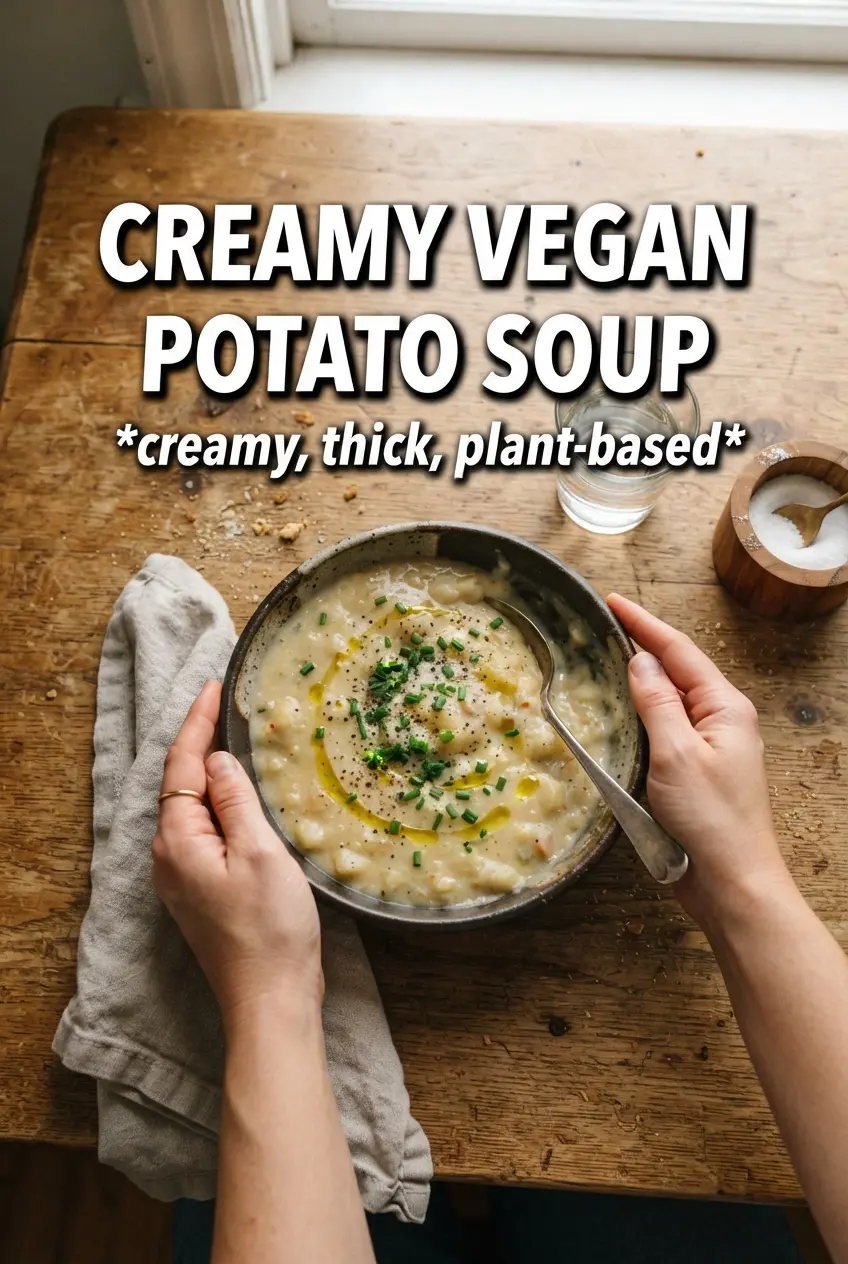
Creamy Vegan Potato Soup
Ingredients
Equipment
Method
- Heat the olive oil in a large pot over medium heat; sauté the onion and celery for 5 minutes, stirring until softened.
- Add the garlic and cook for 1 minute, stirring constantly so it becomes fragrant but doesn’t brown.
- Stir in the garlic powder, onion powder, smoked paprika, and turmeric and cook for 1 minute to bloom the spices.
- Add the vegetable broth and cubed potatoes, then bring to a simmer and cook for 20-25 minutes, until the potatoes are very tender.
- Blend the soup completely smooth with an immersion blender, then stir in the coconut milk and nutritional yeast.
- Add the lemon juice and season generously with salt and pepper until the flavor is balanced.
- Ladle the soup into bowls and top with crispy chickpeas and chives.