
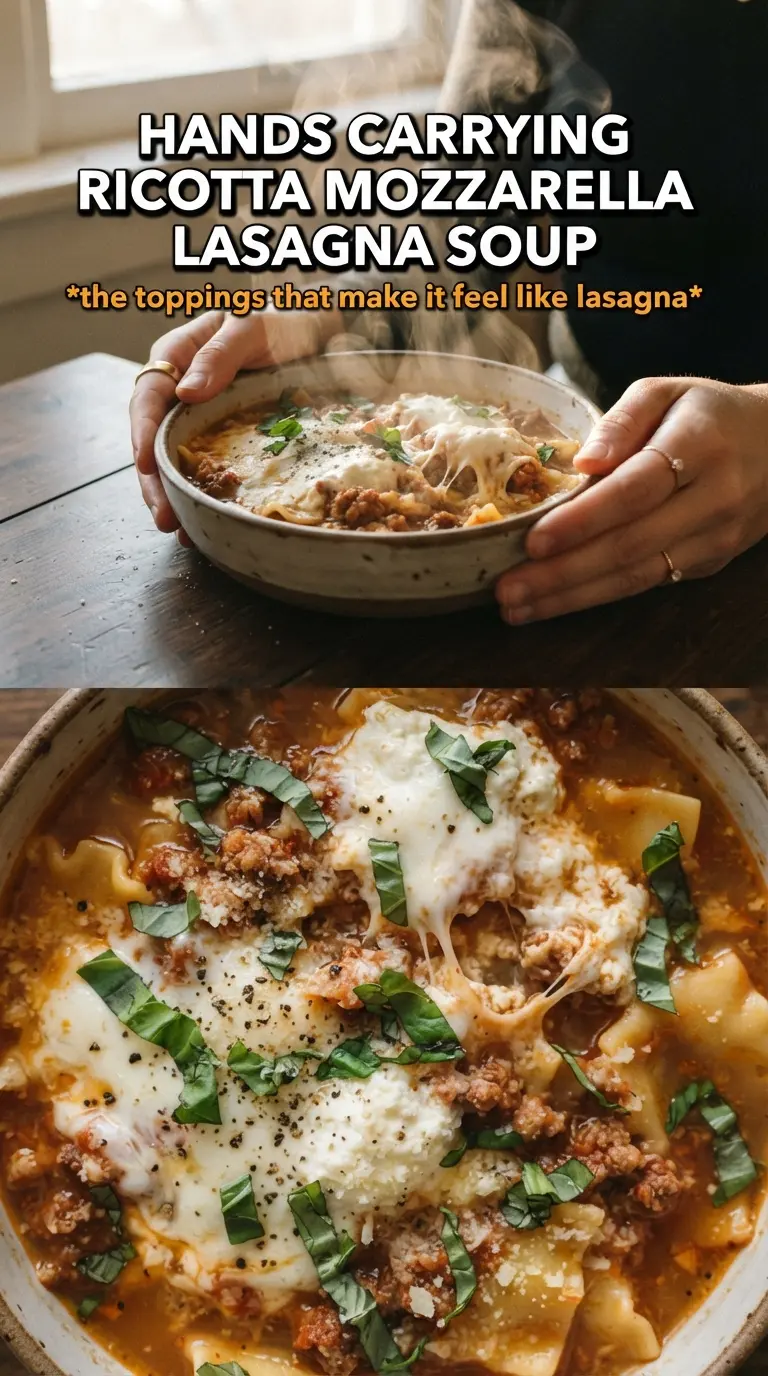
Lasagna soup delivers the same deep tomato richness and cheesy comfort as a pan of baked lasagna, but it gets to the table faster and with a lot less fuss. The broth turns silky from tomato paste and sausage drippings, the noodles soften just enough to feel like lasagna without going mushy, and the ricotta-mozzarella topping melts into the bowl in the best possible way.
What makes this version work is the layering. Browning the sausage first builds the base, and cooking the tomato paste with the onion and garlic takes away that raw canned taste that can make soup feel flat. The cheese topping matters too: ricotta gives you that creamy lasagna center, mozzarella brings stretch, and parmesan sharpens everything so the whole bowl tastes finished instead of just tomatoey.
Below, I’ve laid out the small details that keep the noodles from overcooking and the cheese topping from turning into a clump. There’s also a good way to handle leftovers so the soup stays brothy instead of soaking up every drop by the next day.
The noodles held their shape and the ricotta mixture melted into the broth instead of disappearing. My husband said it tasted like lasagna in a bowl and asked me to put it on repeat.
Save this lasagna soup with ricotta and mozzarella for nights when you want all the comfort of baked lasagna in a single pot.
The Trick to Keeping the Soup Brothy Instead of Turned Into Pasta Porridge
Lasagna noodles are the part that can go wrong fastest. They keep drinking liquid as they sit, which means a soup that looks perfect at the stove can thicken into something closer to stew ten minutes later. Broken noodles are the right move here, but they need just enough time to cook through and then get out of the hot broth before they start losing their shape.
The other place people run into trouble is the cheese topping. If you stir ricotta straight into the pot, it melts unevenly and disappears into the broth. A separate dollop on top gives you that creamy lasagna bite in every spoonful, and the mozzarella softens without turning stringy in a clump.
- Italian sausage — This is the backbone of the soup. Use mild for a softer, more classic flavor or hot sausage if you want the broth to carry more heat. If you use turkey sausage, add a little extra olive oil so the base doesn’t taste lean.
- Tomato paste — This is what gives the broth depth instead of just red color. Cook it with the onion and garlic until it darkens slightly and smells sweet; that short step makes a big difference.
- Crushed tomatoes and fire-roasted tomatoes — The crushed tomatoes build body, while the fire-roasted tomatoes bring a little smoky edge that keeps the soup from tasting flat. If you only have regular diced tomatoes, the soup will still work, but it will be less layered.
- Ricotta and whole milk mozzarella — Whole milk versions give you the creamiest topping and the best melt. Part-skim works in a pinch, but it won’t be as lush. Mix them with parmesan and a pinch of nutmeg so the topping tastes seasoned, not just milky.
- Lasagna noodles — Break them into rough pieces so they catch broth in the bowl. No-boil noodles aren’t necessary here, but if that’s what you have, check them early because they can soften fast.
What Each Ingredient Is Actually Doing in This Recipe
- Primary ingredient (the star) — Quality matters most. Choose the best you can find.
- Cooking medium (oil, butter, or broth) — This carries flavors and prevents dryness.
- Seasonings (salt, pepper, spices, herbs) — Layer flavors so nothing overpowers. Build depth gradually.
- Aromatics (garlic, onion, herbs) — Cook with fat to bloom flavors. Become the foundation.
- Supporting ingredients — Complement the main ingredient without overpowering it.
- Sauce or liquid (if applicable) — Brings flavors together. Balance richness with acid.
- Acid (lemon, vinegar, wine, or other) — Brightens and prevents flat-tasting results.
- Final finish (garnish, glaze, or sauce) — Prevents one-dimensional taste and adds visual appeal.
Building the Tomato Base Before the Noodles Go In
Brown the sausage first
Cook the sausage over medium-high heat until it loses its pink color and the edges start to brown. Those browned bits left behind are part of the flavor, so don’t drain the pan so aggressively that you wipe them out. If the sausage gives off a lot of fat, spoon off the excess after browning so the finished soup doesn’t feel greasy.
Cook the onion, garlic, and tomato paste together
Let the diced onion soften in the same pot until it turns translucent and sweet, then add the garlic and tomato paste. The paste should darken from bright red to a deeper brick color and stop smelling raw. If you add the broth too early, the paste never gets that concentrated flavor, and the soup tastes thinner than it should.
Simmer the broth and herbs
Once the tomatoes and broth go in, bring everything up to a boil, then drop it back to a steady simmer. You want the broth to move gently, not furiously, so the tomatoes stay mellow and the sausage flavor spreads through the pot instead of boiling away. This is the stage where the seasoning matters most, so taste the broth before the noodles go in and adjust if it needs more salt.
Cook the noodles just until tender
Add the broken lasagna noodles and simmer them until they’re tender with a little bite in the center, usually 10 to 12 minutes. The pot will look fuller and the broth will thicken as the noodles release starch, which is exactly what you want. Pull the soup from the heat as soon as the noodles are done, because they keep cooking in the hot liquid even after the burner is off.
Make it a little lighter without losing the lasagna feel
Swap the sausage for ground turkey or chicken and use part-skim mozzarella if you want a lighter bowl. The broth will be a touch leaner, so add an extra pinch of salt and a small splash of olive oil to keep the base from tasting thin.
Gluten-free without losing the texture
Use a sturdy gluten-free lasagna noodle and watch it closely near the end of the simmer. Gluten-free noodles can go from tender to soft faster than wheat noodles, so test them early and serve right away before they start breaking apart.
A vegetarian version that still tastes substantial
Skip the sausage and build the base with sautéed mushrooms and a little extra tomato paste for depth. Use vegetable broth instead of beef broth, and add a teaspoon of fennel seed if you want a more sausage-like flavor without the meat.
Storage and Reheating
- Refrigerator: Keeps well for 3 to 4 days. The noodles will continue to absorb broth, so expect a thicker soup the next day.
- Freezer: Freezes well without the noodles for best texture. If you know you want leftovers, freeze the soup base and cook fresh noodles when you reheat it.
- Reheating: Warm it gently on the stovetop with a splash of broth or water to loosen it back up. If you reheat it hard in the microwave, the noodles can turn soft and the cheese topping loses its creamy texture.
Answers to the Questions Worth Asking

Lasagna Soup With Ricotta And Mozzarella
Ingredients
Equipment
Method
- Brown the Italian sausage in a Dutch oven over medium-high heat, breaking into crumbles until browned, 8-10 minutes. Drain the fat from the pot and keep the browned crumbles in place.
- Sauté the onion in the same pot for 4 minutes over medium-high heat until softened and glossy. Stir in the garlic and tomato paste, then cook 2 minutes until fragrant.
- Add the crushed tomatoes, diced fire-roasted tomatoes, beef broth, Italian seasoning, dried basil, dried oregano, and red pepper flakes. Bring the mixture to a boil over high heat, then maintain a steady boil briefly to fully combine.
- Add the lasagna noodles broken into rough 2-inch pieces to the pot. Simmer for 10-12 minutes over medium heat until the noodles are cooked through.
- Season the soup generously with Salt and pepper. Taste and adjust so the broth is well seasoned before serving.
- Mix the whole milk ricotta, shredded whole milk mozzarella, freshly grated parmesan, fresh basil, and nutmeg together until well combined. Season with Salt and pepper and stir until smooth and cohesive.
- Ladle the hot soup into bowls. Drop a very large dollop of the cheese mixture into each bowl so it melts dramatically into the tomato broth.