
Clear, golden broth and tender chicken are what make a bowl of Panera-style chicken noodle soup worth chasing, and this version gets both right without tasting flat or overworked. The noodles stay soft but intact, the vegetables hold enough texture to feel like soup instead of paste, and the whole pot tastes clean, savory, and familiar from the first spoonful.
The difference is in the order of the cooking. The vegetables soften first so they release flavor into the pot, the broth gets seasoned before the chicken goes in, and the noodles are added at the end so they don’t bloat and steal the body from the soup. Using a good broth matters here more than almost anything else, because this recipe doesn’t rely on cream or a heavy roux to cover weak flavor.
Below you’ll find the little timing details that keep the broth clear and the noodles pleasantly toothsome, plus a few smart swaps if you need to work with what you’ve got in the kitchen.
The broth stayed clear, the noodles didn’t turn mushy, and it tasted close enough to Panera that my husband went back for a second bowl before I even sat down.
Save this Panera-style chicken noodle soup for the nights when you want that clear, savory broth and tender egg noodles without leaving the house.
The Broth Stays Clear When You Don’t Rush the Vegetables
If the vegetables go into the broth raw, the soup tastes thinner and the aromatics never fully soften into the base. A short sauté first changes that. The onion sweetens, the carrots and celery lose their raw edge, and the pot starts building flavor before the liquid even goes in.
The other place this soup goes sideways is the noodle timing. Egg noodles keep soaking up broth after the heat is off, so if you simmer them too long, the pot turns starchy and heavy instead of light and spoonable. Adding them near the end keeps the broth clean and gives you that Panera-style balance between broth and noodles.
What Each Ingredient Is Doing in This Bowl
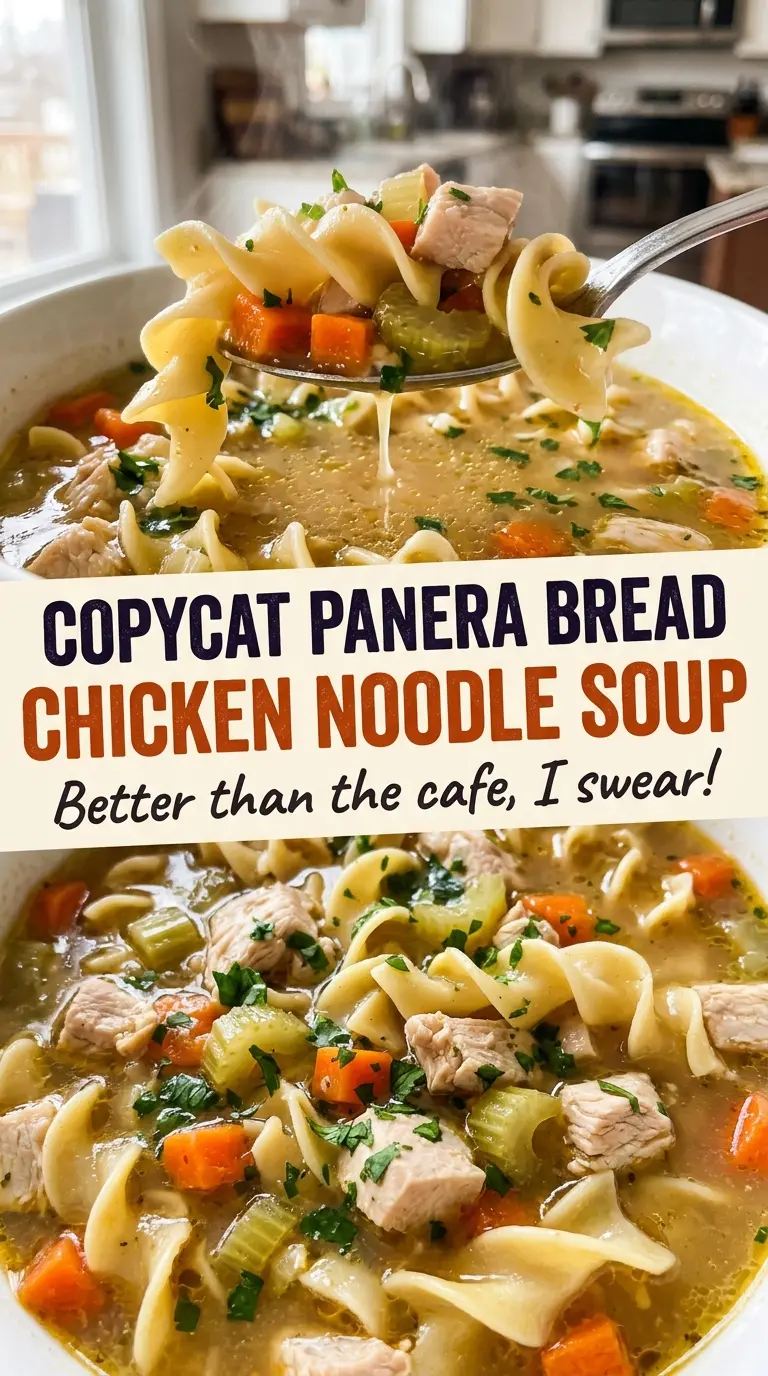
- Chicken breast — Cut it into 1-inch pieces so it cooks fast and stays tender. Bigger chunks take longer and can drift into dry territory by the time the noodles are ready.
- Chicken broth — This is the backbone of the soup, so use the best broth you can get. If your broth is low-sodium, that works well here because you can season it properly yourself; regular broth can turn salty once it reduces a little.
- Carrots, celery, and onion — This trio gives the soup its classic bakery-café flavor and the little bits of texture that keep every spoonful interesting. Dice the onion small so it melts into the broth instead of standing out in sharp pieces.
- Garlic and dried herbs — Garlic, thyme, rosemary, and poultry seasoning give the broth that cozy, familiar taste Panera soups have. Rosemary is the strongest of the bunch, so keep it measured; too much and the soup starts tasting piney.
- Egg noodles — These are the texture marker for the whole recipe. Break them into shorter pieces so the soup eats more like the café version and the noodles distribute evenly through the bowl.
- Fresh parsley — Add it at the end for a clean finish. Dried parsley won’t give you the same fresh lift, and it disappears into the broth instead of brightening it.
The 20 Minutes That Actually Matter
Softening the Aromatics
Warm the olive oil in a large pot, then cook the onion, carrots, and celery until the onion turns translucent and the carrots lose their raw crunch. You want the vegetables softened, not browned, because browning pushes the soup in a different direction and hides the clean chicken-noodle flavor. If the pot looks dry before the vegetables are ready, lower the heat instead of adding more oil. Garlic goes in at the end of this stage so it doesn’t scorch in the hot pan.
Building the Broth
Once the garlic is fragrant, pour in the broth and add the thyme, rosemary, and poultry seasoning. Bring it to a boil only long enough to get the liquid moving, then settle it back to a steady simmer. A hard boil can make the broth cloudy and pull the chicken apart too aggressively. At this stage, the soup should smell like herbs and savory chicken stock, not raw onion or sharp garlic.
Cooking the Chicken Through
Add the diced chicken to the simmering broth and let it cook until it’s no longer pink in the center and the pieces are tender, usually about 12 minutes. Small pieces cook faster than strips or whole chunks, which helps keep the soup from overcooking while the broth is developing flavor. If the broth is boiling hard, the chicken can get stringy on the outside before it’s cooked through inside, so keep the simmer gentle. Skim off any foam if it rises, and the broth will stay cleaner.
Finishing with the Noodles
Stir in the broken egg noodles and cook just until they’re al dente, about 6 to 7 minutes. Taste one noodle near the end; it should still have a little firmness at the center because it will keep softening in the hot soup. This is the point where people lose the texture, usually by walking away a minute too long. Pull the pot off the heat as soon as the noodles are done, then stir in the parsley and season with salt and pepper until the broth tastes round and full.
How to Adapt This for Different Pans, Diets, and Leftovers
Use rotisserie chicken instead of raw chicken breast
If you want to shorten the cook time, stir in shredded rotisserie chicken after the broth has simmered with the vegetables and herbs for a few minutes. The flavor will be a little deeper and saltier than chicken breast, and the soup will feel more finished fast, but the chicken won’t have the same clean, freshly cooked texture. Add it late so it doesn’t turn stringy.
Make it gluten-free with the right noodle swap
Use a gluten-free egg-style noodle or a small gluten-free pasta shape, but cook it separately if the package directions are vague. Gluten-free pasta can break down fast in the broth, and cooking it on its own keeps the soup from going cloudy or starchy. Add the cooked noodles to each bowl, then ladle the broth over top.
Skip the noodles for a lighter bowl
Leave out the egg noodles and add a few extra carrots and celery if you want a lighter, broth-forward soup. The result is closer to a chicken vegetable soup, and it reheats better because there’s no pasta soaking up liquid in the fridge. This is the cleanest way to keep it lower in carbs without losing the Panera-style broth flavor.
Storage and Reheating
- Refrigerator: 3 to 4 days. The noodles will absorb broth as it sits, so expect the soup to thicken a bit.
- Freezer: It freezes well if you freeze the broth, chicken, and vegetables without the noodles. Pasta turns soft after thawing, so cook fresh noodles when you reheat.
- Reheating: Warm it gently on the stove over medium-low heat until steaming, not boiling. A hard boil can shred the chicken and turn the noodles mushy, especially if they’ve already sat in the broth overnight.
Answers to the Questions Worth Asking

Copycat Panera Bread Chicken Noodle Soup
Ingredients
Equipment
Method
- Heat olive oil in a large pot over medium heat and sauté the onion, carrots, and celery for 5 minutes until softened, stirring often to prevent browning.
- Add the garlic and cook for 1 minute until fragrant, then immediately proceed so the garlic doesn’t burn.
- Pour in the chicken broth and stir in thyme, rosemary, and poultry seasoning, keeping the pot at a gentle simmer once heated through.
- Bring the soup to a boil, then add the chicken pieces and simmer for 12 minutes until the chicken is cooked through and no longer pink.
- Add the egg noodles and cook for exactly 6-7 minutes until just al dente, stirring occasionally so the noodles don’t stick.
- Stir in the fresh parsley, then season generously with salt and pepper to taste.