
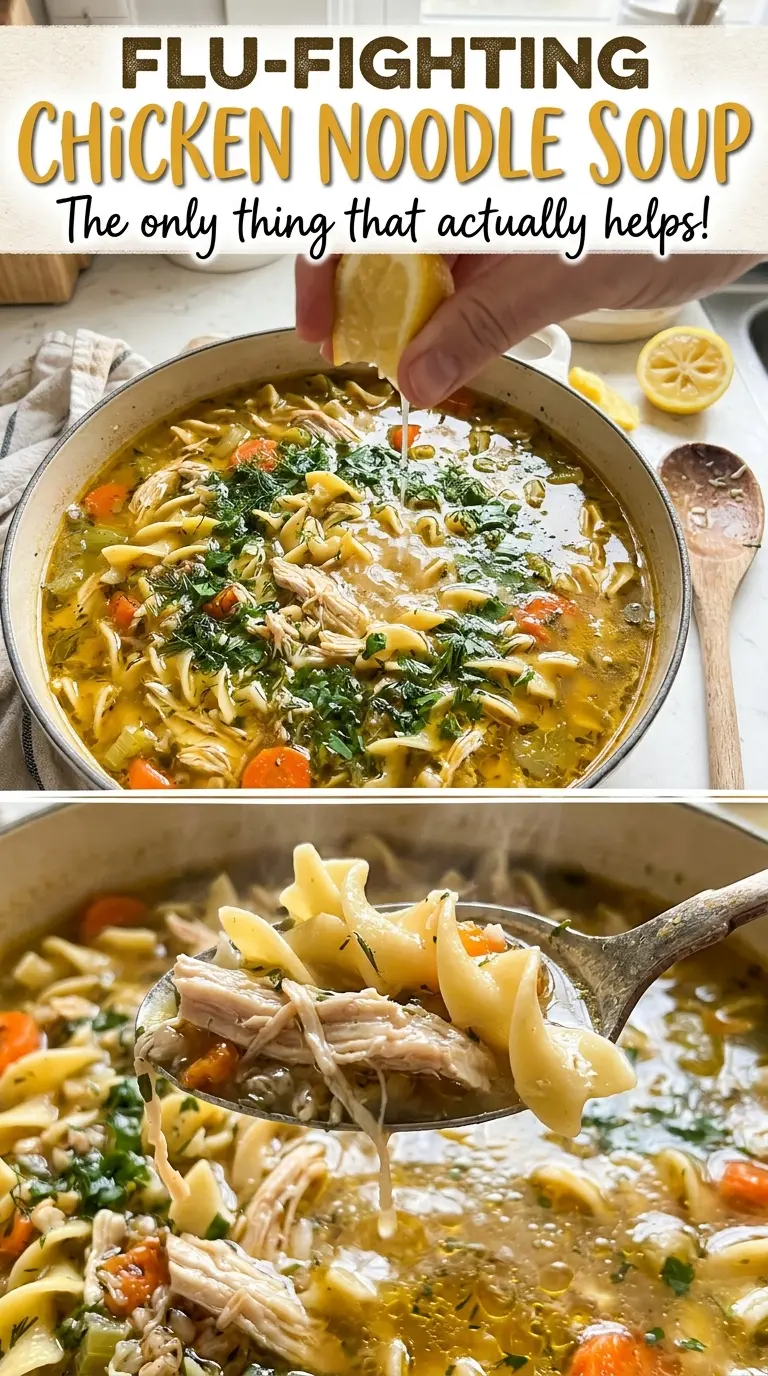
Deeply golden broth, tender shredded chicken, and noodles that soak up just enough ginger and garlic to feel warming from the first spoonful — that’s what makes this soup worth keeping on repeat. The lemon at the end wakes everything up, and the little hit of cayenne keeps the broth from tasting flat or sleepy. It’s the kind of bowl that lands somewhere between comfort food and practical care.
What gives this version its edge is the layering. The chicken simmers with carrots, celery, onion, garlic, and ginger long enough to build a broth that tastes like it had hours on the stove, even though the whole pot comes together fast. Honey softens the sharper edges from the vinegar and lemon, while turmeric adds color and a quiet earthy note that makes the broth taste fuller.
Below, I’ll walk through the one timing detail that matters most — when to add the noodles so they stay brothy instead of turning mushy — plus a few smart swaps if you need to use boneless chicken or want to stretch the pot a little farther.
The broth tasted bright and soothing, and the ginger-garlic base came through without overpowering the chicken. I added the noodles at the very end like you said, and they stayed perfect instead of going mushy by the next bowl.
Save this ginger-kissed chicken noodle soup for the nights when you want a broth that tastes bright, soothing, and deeply homemade.
The Broth Gets Its Strength Before the Noodles Go In
The biggest mistake with chicken noodle soup is treating it like a noodle dish first and a broth second. If the noodles go in too early, they drink up the liquid, swell past the right texture, and leave you with a pot that eats more like stew. This soup works because the chicken and vegetables build the base first, and the noodles only come in after the broth already tastes complete.
Bone-in chicken matters here because it gives you more flavor in the broth without needing a long simmer. Ginger, garlic, turmeric, and thyme do more than season the surface; they perfume the whole pot and keep the soup from tasting like plain chicken broth with add-ins. The lemon juice and apple cider vinegar at the end are what make the broth taste lively instead of heavy.
What Each Ingredient Is Actually Doing in This Soup
- Bone-in chicken — This gives the broth more body and a deeper chicken flavor than boneless pieces. If you only have boneless chicken, use it, but the broth will taste lighter and you may want a little extra salt at the end.
- Fresh ginger and garlic — These are the backbone of the soup’s warmth. Pre-minced garlic works in a pinch, but fresh ginger is worth using because it gives the broth that clean, sharp lift that dried ginger can’t really match.
- Turmeric — This adds the golden color and a subtle earthy note. It doesn’t make the soup taste like curry; it just rounds out the broth and gives it more depth.
- Honey, lemon juice, and apple cider vinegar — This trio is what keeps the soup from tasting one-dimensional. The honey softens the acid, the lemon brightens everything, and the vinegar sharpens the finish without making the broth sour.
- Egg noodles — These absorb flavor fast and turn soft quickly, which is why they go in at the very end. If you want leftovers to hold up better, cook the noodles separately and add them to each bowl instead of the pot.
The Order That Keeps the Broth Clear and the Noodles Tender
Starting with the aromatic base
Combine the chicken, carrots, celery, onion, garlic, ginger, broth, turmeric, cayenne, and thyme in a large pot and bring it up to a boil. That initial boil helps the broth move quickly from bland to fragrant, then the lower simmer takes over and keeps the chicken tender. If the pot boils hard the whole time, the broth can turn cloudy and the chicken can tighten up.
Simmering until the chicken is ready to shred
Once the pot drops to a simmer, let it go for 25 to 30 minutes, just until the chicken is cooked through and gives up easily when you pull it apart. You’re looking for chicken that shreds without resistance, not pieces that have dried out from hanging around too long. Bone-in pieces may need the full time; smaller cuts can be ready a little sooner.
Pulling the chicken apart and finishing the noodles
Remove the chicken, shred it, and return it to the pot before the noodles go in. Add the egg noodles only after the broth is already tasting the way you want, then cook them until they’re tender but still have a little bite, usually 6 to 8 minutes. If they sit in the hot broth too long, they’ll keep swelling and drink up the soup.
Brightening the broth at the end
Stir in the honey, lemon juice, and apple cider vinegar after the noodles are done. That order matters because acid can dull a simmer if it goes in too early, and it can also make the soup taste flat if it gets cooked off. Taste and season with salt and pepper right at the end, then serve with extra lemon wedges so each bowl can be sharpened to taste.
How to Adapt This Soup When You Need a Different Version
Use boneless chicken thighs for a faster version
Boneless thighs cook a little faster and still stay juicy, which makes them the best shortcut if you don’t want to deal with bones. The broth won’t be quite as rich, so lean on the ginger, garlic, and lemon at the end to keep the soup lively.
Make it gluten-free with rice noodles or gluten-free pasta
Swap the egg noodles for a gluten-free noodle that cooks in the same general time, but watch the pot closely because some gluten-free pastas break down faster. Rice noodles work too, though they soften faster and are best added just before serving if you want them to keep their shape.
Skip the noodles for a lower-carb bowl
Leave the noodles out entirely and add extra carrots or a handful of chopped spinach near the end. You’ll get a lighter bowl with the same broth, and the texture stays clean instead of turning starchy.
Storage and Reheating
- Refrigerator: 4 days. The noodles will keep absorbing broth, so the soup gets thicker by day two.
- Freezer: Freezes well if you leave out the noodles and add fresh ones later. Freeze the broth and chicken in portions for up to 3 months.
- Reheating: Warm it gently over medium-low heat until steaming, not boiling. If the noodles are already in the soup, add a splash of broth or water because they’ll have soaked some up overnight.
Questions I Get Asked About This Recipe

Flu-Fighting Chicken Noodle Soup
Ingredients
Equipment
Method
- Combine chicken, carrots, celery, onion, garlic, fresh ginger, chicken broth, turmeric, cayenne pepper, and dried thyme in a large Dutch oven. Bring to a boil over medium-high heat.
- Reduce heat to maintain a gentle simmer and cook for 25-30 minutes, until the chicken is cooked through. The broth should be lightly bubbling with vegetables softened.
- Remove the chicken from the pot, shred it, and return the shredded chicken to the broth. Stir until evenly distributed.
- Add egg noodles to the pot and cook for 6-8 minutes, until tender. Stir occasionally so the noodles don’t stick.
- Stir in honey, lemon juice, and apple cider vinegar. Season with salt and black pepper to taste, and keep the soup hot but not violently boiling.
- Ladle the soup into bowls and top with fresh parsley. Serve immediately with lemon wedges for squeezing over the top.