
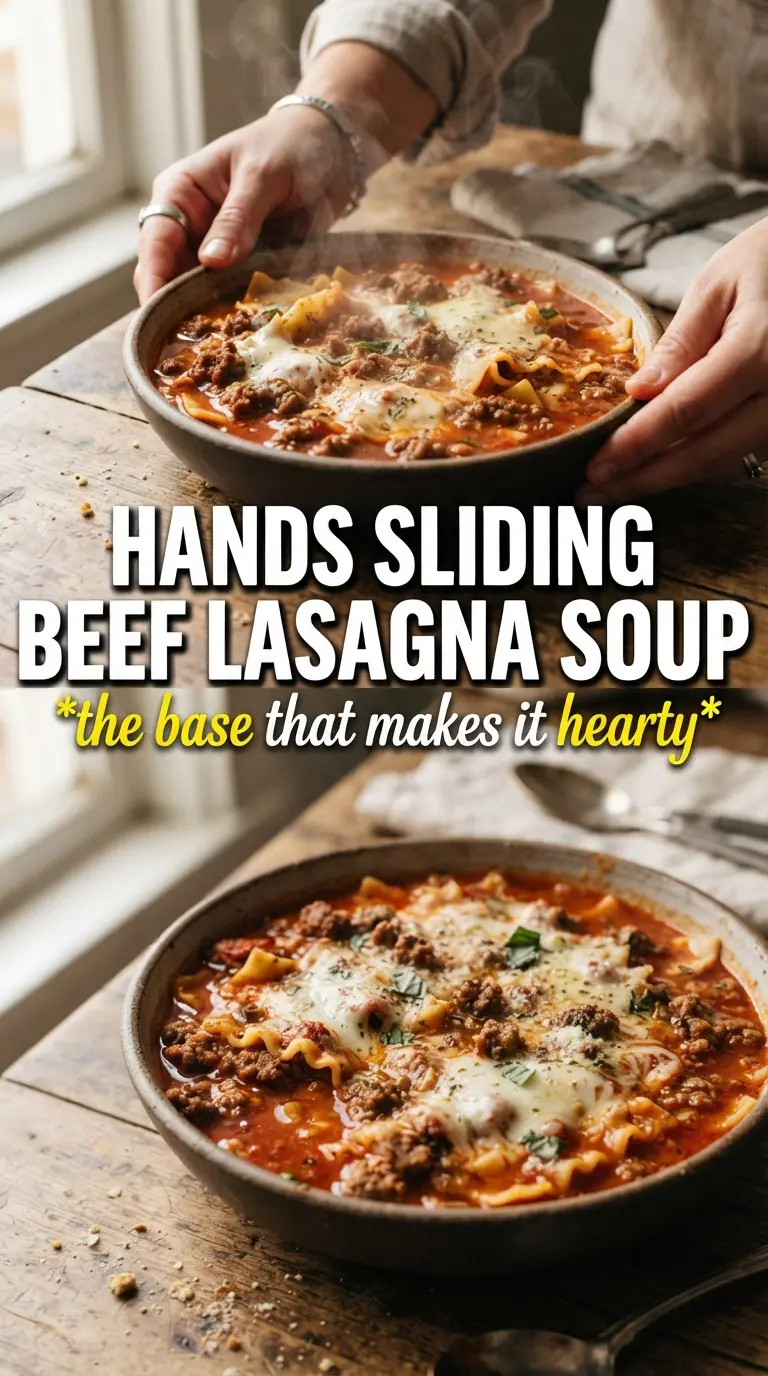
Beef lasagna soup gives you all the comfort of a baked lasagna without waiting for a casserole dish to bubble in the oven. The broth turns rich and tomato-forward, the noodles soften into something spoonable, and the ricotta-mozzarella topping melts into little creamy pockets that make each bowl feel complete. It’s the kind of dinner that lands fast but still tastes like it took real effort.
What makes this version work is building the base in layers. Browning the beef first gives the broth depth, and letting the tomato paste cook with the onion and garlic takes away that raw, tinny edge that can make quick soups taste flat. Breaking the noodles before they go in also matters because you get the lasagna texture without wrestling long pasta sheets in a shallow pot.
Below, I’ll walk through the one step that keeps the broth from tasting thin, plus a few swaps that help if you want to stretch it, lighten it, or make it ahead for an easy reheat.
The tomato broth was rich without being heavy, and the noodles stayed perfectly tender. I also loved that the ricotta-mozzarella topping melted into the soup instead of sitting in a clump on top.
Love the hearty beef broth and melty ricotta topping? Save this Beef Lasagna Soup for the nights when you want lasagna comfort without layering a pan.
The Shortcut Most People Miss: Cooking Down the Tomato Paste First
The difference between a soup that tastes layered and one that tastes like seasoned tomato water comes down to a few minutes at the stove. Tomato paste needs heat before it meets the broth. When you cook it with the onion and garlic, it darkens a bit and loses that sharp canned flavor, which gives the whole pot a deeper base.
The other thing that matters is timing the noodles. They need enough simmering time to turn tender, but not so much that they go bloated and fall apart. Once they’re in, keep the soup at a steady simmer and stir often enough to keep the pieces from sticking to the bottom of the pot.
What Each Ingredient Is Actually Doing in This Bowl
- Lean ground beef — This gives the soup its savory backbone. Lean beef keeps the broth from turning greasy, but if you only have a fattier blend, drain off all but a tablespoon or two after browning.
- Crushed tomatoes and diced tomatoes — The crushed tomatoes build body, while the diced tomatoes leave you with little pieces of tomato throughout the soup. If you want a smoother broth, use two cans of crushed tomatoes instead.
- Tomato paste — This is the ingredient that makes the broth taste cooked and concentrated instead of thin. Don’t skip the step where it cooks with the onion and garlic, because that quick caramelization changes the whole pot.
- Broken lasagna noodles — These give you the lasagna feel without needing to layer or bake. Break them into rough pieces, not tiny shards, so the soup still feels hearty when you eat it.
- Ricotta, mozzarella, parmesan, and basil — The cheese dollop is what makes this taste like lasagna instead of just beef and tomato soup. Ricotta adds creaminess, mozzarella melts into the broth, parmesan sharpens the flavor, and basil keeps the topping fresh.
The 30 Minutes That Matter in the Pot
Browning the Beef Properly
Cook the ground beef in a large pot over medium-high heat until it’s no longer pink and you see browned bits on the bottom. Those bits are flavor, so don’t rush to drain the pot before the meat has had time to take on color. If there’s a lot of fat, drain it off now so the soup doesn’t feel heavy later.
Building the Tomato Base
Add the onion to the same pot and cook it until softened, then stir in the garlic and tomato paste. The paste should darken slightly and smell sweeter after a minute or two. If it starts to stick hard, lower the heat; you want it cooked, not scorched.
Simmering the Soup and Cooking the Noodles
Pour in the tomatoes, broth, and herbs, then bring everything to a boil before adding the noodles. Once the noodles go in, reduce the heat to a steady simmer and stir every few minutes so they don’t clump together. Pull the pot off the heat when the noodles are tender but still hold their shape, because they’ll keep softening in the hot broth.
Finishing Each Bowl
Season with salt at the end, after the noodles have released a little starch and the broth has concentrated. Spoon the cheese mixture into bowls rather than stirring it through the whole pot, since that keeps the creamy topping distinct and lets it melt into the soup as you eat. A little fresh basil on top sharpens everything up.
Three Smart Ways to Change the Bowl Without Losing the Point
Make it gluten-free with the right pasta
Use a gluten-free lasagna noodle or another sturdy short pasta made from rice or corn. Gluten-free pasta softens faster, so start checking it a couple of minutes early. The broth still tastes the same, but the texture is a little more delicate, so don’t walk away from the pot.
Make it dairy-free without losing the creamy finish
Skip the ricotta-mozzarella topping and serve with a spoonful of unsweetened dairy-free cashew cream or a drizzle of olive oil instead. You’ll lose the classic lasagna melt, but you’ll keep the rich tomato-beef base. Add a little extra basil and parmesan-style dairy-free seasoning if you want more of that savory finish.
Make it lighter with ground turkey
Ground turkey works if you want a leaner bowl, but it needs a little help because it doesn’t bring the same deep flavor as beef. Brown it well and don’t skip the tomato paste step, since that’s what fills in the gaps. The result is a little milder, but still hearty enough for dinner.
Storage and Reheating
- Refrigerator: Store for up to 4 days. The noodles will keep absorbing broth, so expect the soup to thicken.
- Freezer: Freeze the soup base without the noodles for best results. Pasta turns soft after thawing, so cook fresh noodles when you reheat if you want the best texture.
- Reheating: Warm gently on the stove over medium-low heat with a splash of broth or water. If you reheat it hard, the noodles can break down and the broth can get overly thick.
Answers to the Questions Worth Asking

Beef Lasagna Soup
Ingredients
Equipment
Method
- Brown the ground beef in a large pot over medium-high heat, then drain the fat.
- Continue browning until the beef is no longer pink, scraping up browned bits for flavor.
- Add the diced onion to the same pot and sauté for 4 minutes.
- Add the minced garlic and tomato paste and cook for 2 minutes, until fragrant.
- Add the crushed tomatoes, diced tomatoes, beef broth, Italian seasoning, dried basil, dried oregano, red pepper flakes, and black pepper, then bring to a boil.
- Add the broken lasagna noodles, reduce heat to a gentle simmer, and cook 10-12 minutes until tender, stirring occasionally to prevent sticking.
- Season with salt to taste and stir well before serving.
- Mix the ricotta, shredded mozzarella, and parmesan for the cheese dollop.
- Serve the soup in bowls with a very generous spoonful of the ricotta-mozzarella dollop, topped with fresh basil.